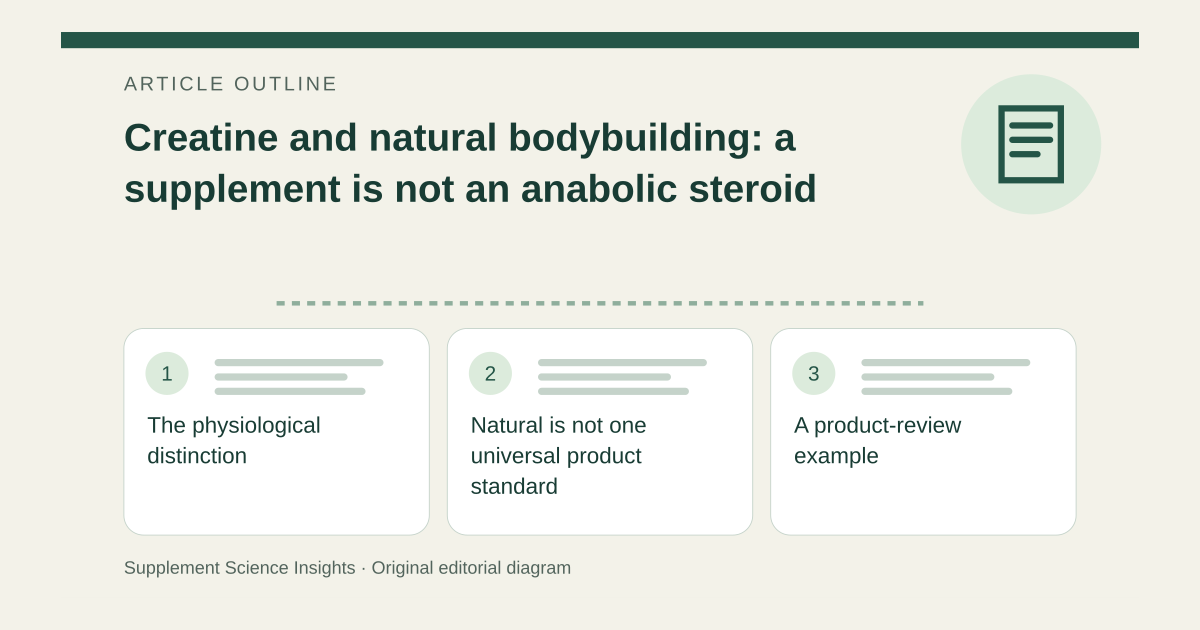
The physiological distinction
Creatine helps support the phosphocreatine system used to regenerate ATP during intense muscular work. Anabolic steroids act through androgen-related mechanisms. The possibility that both affect training outcomes does not make them the same substance. The cited review explains this distinction but is not a current rulebook for every sporting federation. [1][2]
Natural is not one universal product standard
Some athletes who describe their bodybuilding as natural use ordinary nutritional supplements. This article does not estimate how many use creatine or certify eligibility. For competition, consult the actual organizer’s current prohibited-substance and product policies, and assess all ingredients rather than relying on a creatine word on the front label. [2]
A product-review example
Imagine comparing a single-ingredient creatine monohydrate with a blend marketed for extreme muscle growth. Knowing the first ingredient in the blend does not establish the identity of the rest. Review the complete label and relevant quality evidence before any sporting decision; an ingredient’s physiological role does not authenticate the finished product. [2]
| Hypothetical question | Correct distinction |
|---|---|
| Is creatine a steroid? | Different molecule and mechanism |
| Does a federation permit a product? | Check its current rules |
| Does a blend contain only creatine? | Full formula must be checked |
Sources for this article
- Common questions and misconceptions about creatine supplementation: what does the scientific evidence really show? | Journal of the International Society of Sports Nutrition | Springer Nature Link
Source consulted: 2026-09-20. This is a reference resource, not a claim that we conducted the studies or tested a product. - Dietary Supplements for Exercise and Athletic Performance - Health Professional Fact Sheet
Source consulted: 2026-09-20. This is a reference resource, not a claim that we conducted the studies or tested a product.