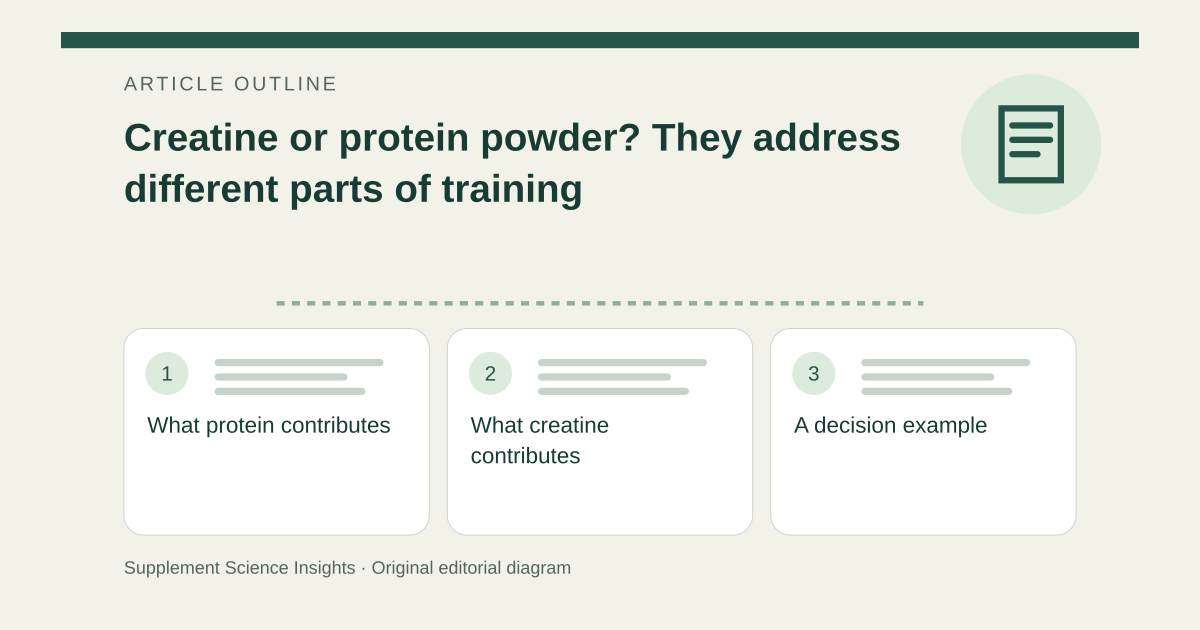
What protein contributes
Adequate dietary protein supports muscle maintenance, repair and adaptation to training. A powder offers a convenient source when food intake is insufficient or inconvenient. It is not intrinsically more effective than a diet that already supplies suitable protein, and more powder does not substitute for progressive training. [1]
What creatine contributes
Creatine helps regenerate ATP during short, intense efforts. ODS describes performance evidence in repeated high-intensity activity and variable individual responses. It is not a protein serving and cannot close a dietary protein gap. Its role in such activity also does not mean it is equally useful for every endurance goal. [1]
A decision example
Imagine a lifter already eats adequate protein but asks about repeated high-intensity efforts. Creatine addresses a different question from adding another shake. Someone whose meals lack enough protein should first address that nutritional gap. Neither scenario proves a particular retail product works; assess the ingredient, total diet, training and individual health context. [1]
| Hypothetical need | Relevant distinction |
|---|---|
| Low protein intake | Food or a suitable protein addition |
| Repeated short intense efforts | Creatine evidence addresses this energy system |
| Expectation that creatine replaces meals | It does not supply a protein serving |
Sources for this article
- Dietary Supplements for Exercise and Athletic Performance - Health Professional Fact Sheet
Source consulted: 2026-09-20. This is a reference resource, not a claim that we conducted the studies or tested a product.