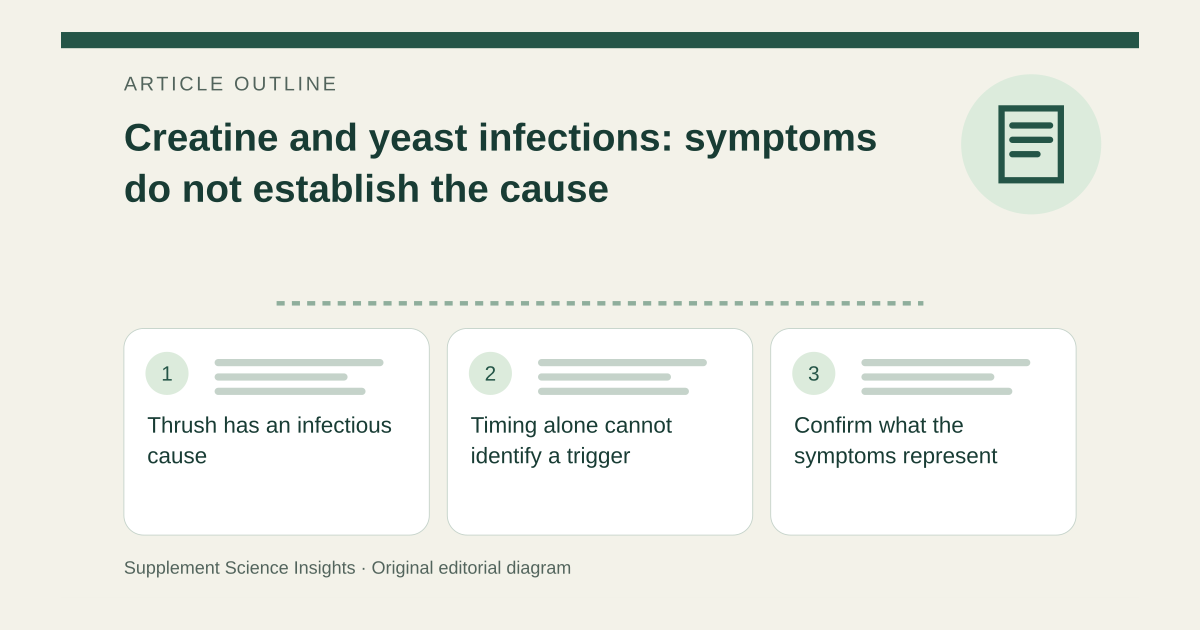
Thrush has an infectious cause
NHS explains that Candida can overgrow when conditions or the normal balance of microbes change. Antibiotics, poorly controlled diabetes, reduced immune function, pregnancy and irritated skin are relevant contexts. Creatine is not identified as an established trigger in that guidance. This is not proof that every product or individual circumstance is irrelevant. [1]
Timing alone cannot identify a trigger
A new workout routine may bring several changes at once, including clothing, medicines or multiple products. Record what changed, but do not diagnose a yeast infection or its cause from the word creatine on a label. The NIH sports summary is not a dedicated candidiasis study. [2][1]
Confirm what the symptoms represent
Itching, soreness or discharge can require examination or testing to distinguish infections. NHS recommends assessment for a first episode, unsuccessful treatment, recurrent thrush, pregnancy or reduced immunity. Do not repeatedly self-treat an unconfirmed diagnosis. [1]
Treat the infection rather than changing sports dosing
Confirmed thrush is usually treated with an appropriate antifungal. The choice depends on the person and site involved. Changing the timing of creatine has not been established here as a treatment, and supplement withdrawal alone should not replace needed care. [1]
Bring the relevant timeline
Imagine genital irritation begins during a course of antibiotics soon after a creatine product was started. Both belong in the history, but the timing does not establish which factor explains the symptoms. Confirm the diagnosis and follow the resulting treatment plan. [1][3]
| Detail | Reason |
|---|---|
| First episode | Confirm the diagnosis |
| Antibiotics or diabetes | Relevant clinical context |
| New product | Record the complete formula |
| Persistent symptoms | Reassessment rather than repeated guessing |
Sources for this article
- Thrush in men and women - NHS
Source consulted: 2026-09-21. This is a reference resource, not a claim that we conducted the studies or tested a product. - Dietary Supplements for Exercise and Athletic Performance - Health Professional Fact Sheet
Source consulted: 2026-09-21. This is a reference resource, not a claim that we conducted the studies or tested a product. - Dietary Supplements: What You Need to Know
Source consulted: 2026-09-21. This is a reference resource, not a claim that we conducted the studies or tested a product.