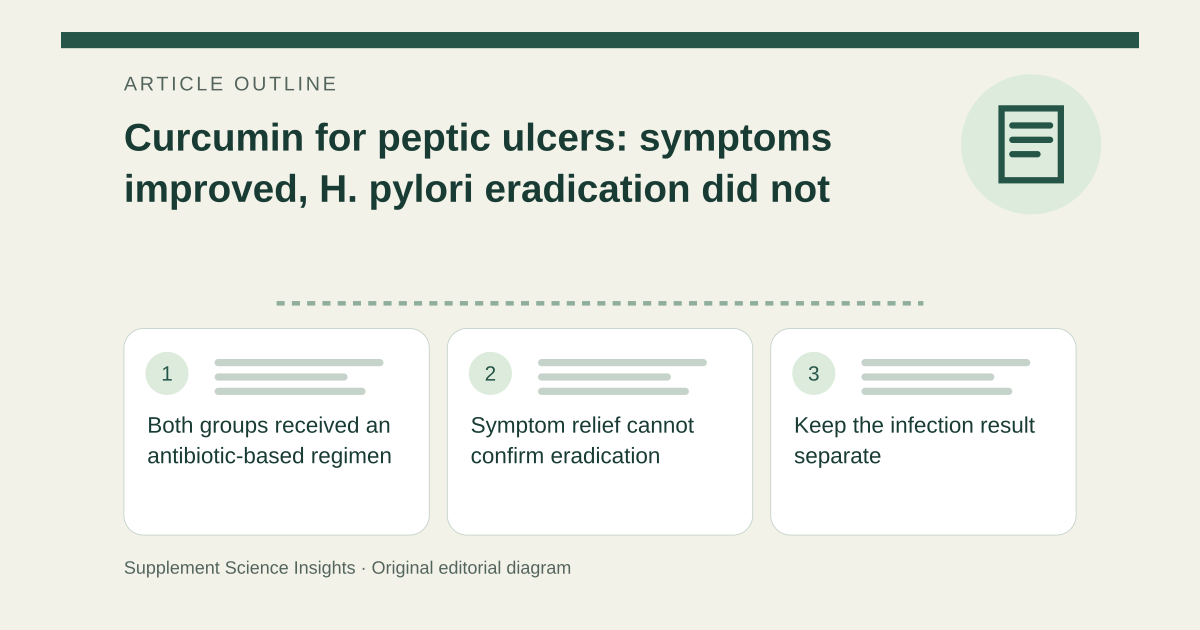
Both groups received an antibiotic-based regimen
Participants with peptic ulcer received standard H. pylori treatment and were randomized to additional curcumin or placebo. Investigators assessed dyspepsia and later used a urea breath test to evaluate eradication. [1]
Symptoms improved more with curcumin, but the reported eradication rate was 73.3% in each group. The supplement did not improve that infection outcome. [1]
Symptom relief cannot confirm eradication
This was an add-on study, not a test of curcumin instead of antibiotics. It cannot support replacing a prescribed eradication regimen or skipping follow-up testing because discomfort improves. [1]
The abstract did not fully establish sample size, treatment duration, funding or conflicts. Its short-trial tolerability statement does not establish safety for everyone. Current treatment selection depends on clinical context; an older trial’s medication list should not be copied as a present-day self-treatment prescription. [1]
Keep the infection result separate
Imagine discomfort improves but the infection test remains positive. Symptom relief and eradication are different outcomes, so the person still needs the planned clinical follow-up.
| Detail | Interpretation |
|---|---|
| Dyspepsia symptoms | Greater improvement |
| H. pylori eradication | Same reported rate |
| Antibiotic replacement | Not tested |
Sources for this article
- Adjunctive Therapy with Curcumin for Peptic Ulcer: a Randomized Controlled Trial - PubMed
Source consulted: 2026-09-19. This is a reference resource, not a claim that we conducted the studies or tested a product.