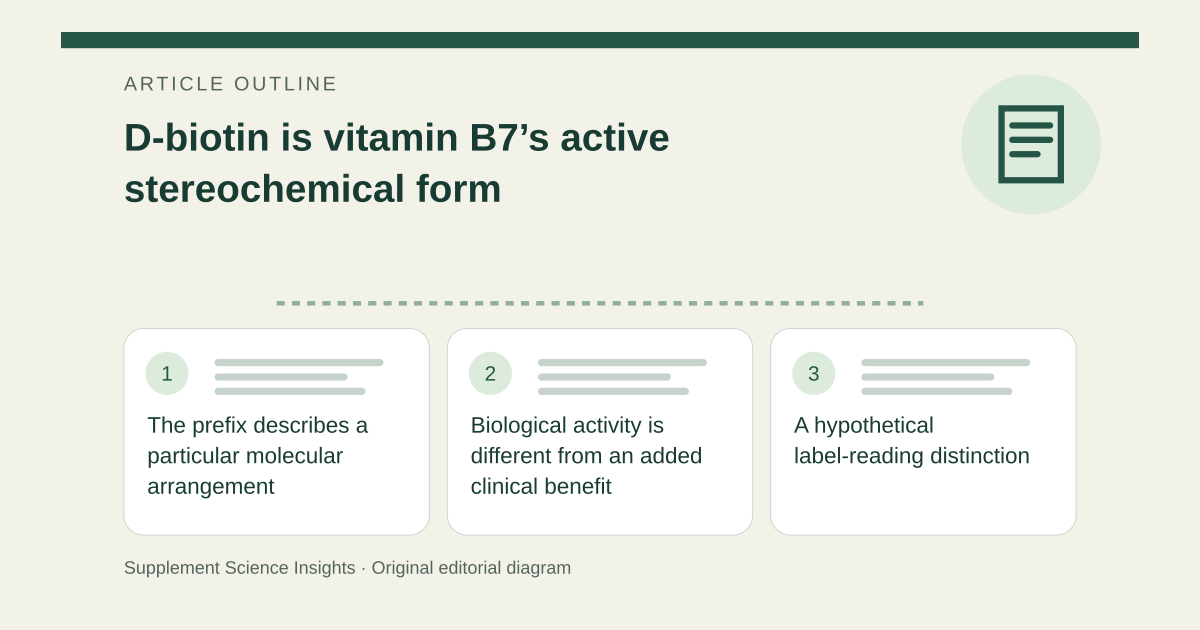
The prefix describes a particular molecular arrangement
Biotin is also called vitamin B7 or vitamin H. A Government Chemist analytical report explains that its three asymmetric carbon atoms allow eight possible stereoisomers; D(+)-biotin is the naturally occurring biologically active form. The prefix identifies that arrangement, rather than a separate vitamin or a supplement potency category. [1]
Different molecular arrangements can share an elemental formula, so the structural designation carries information that a formula alone does not. It does not reveal whether a finished product contains the declared amount or is suitable for a particular person. [1]
Biological activity is different from an added clinical benefit
Biotin acts as a cofactor for carboxylase enzymes involved in fatty-acid, glucose and amino-acid metabolism. Calling the form active means it can participate in those biological processes; it does not show that taking extra improves hair or nails in someone with adequate intake. [2]
High supplemental biotin can interfere with some laboratory assays, causing misleading results. Tell the clinician or laboratory what you take before testing, and follow instructions for the particular test rather than choosing a universal stop interval from the name D-biotin. [2]
A hypothetical label-reading distinction
Imagine two labels both name D-biotin but give amounts in different mass units. A label stating 1 mg supplies 1,000 mcg; another stating 100 mcg supplies one tenth as much. The same chemical name does not mean the same amount, and this arithmetic does not establish that either amount is needed. [1]
| Label statement | Interpretation |
|---|---|
| D-biotin | Specified stereochemical form |
| 1 mg | 1,000 mcg |
| 100 mcg | 0.1 mg |
Sources for this article
- Government Chemist Programme: The determination of biotin in food using HPLC (2014)
Source consulted: 2026-09-20. This is a reference resource, not a claim that we conducted the studies or tested a product. - Biotin - Health Professional Fact Sheet
Source consulted: 2026-09-20. This is a reference resource, not a claim that we conducted the studies or tested a product.