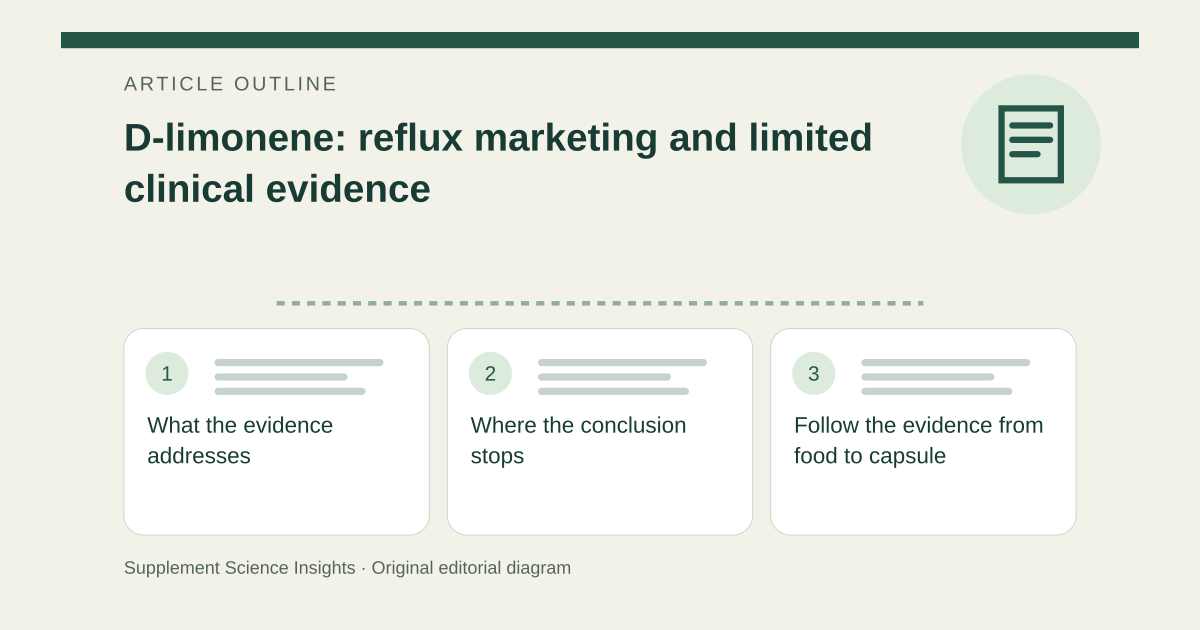
What the evidence addresses
D-limonene is a compound found in citrus peel and sold as a supplement. MSK notes marketing for reflux and cancer-related uses, but describes clinical evidence as limited. A proposed use is not the same as a demonstrated treatment benefit. [1]
Where the conclusion stops
Laboratory anticancer findings and observations about citrus-peel consumption cannot establish that a D-limonene capsule prevents or treats cancer. The MSK overview does not provide a basis for a proven reflux-treatment claim. [1]
Follow the evidence from food to capsule
Imagine an advertisement moves from “found in citrus peel” to “studied in cells” to “supports recovery.” Each step introduces a new question. Was the preparation comparable? Was it tested in people? Did the study measure the advertised outcome? The presence of a citation somewhere in that chain does not answer all three.
For a reflux claim, ask for a controlled human study that actually measured reflux symptoms with the offered preparation. For a cancer claim, require evidence about patient outcomes rather than the behavior of isolated cells. These are different questions, so a large stack of laboratory papers can still leave the practical question unanswered.
| Hypothetical evidence | What it does not establish |
|---|---|
| A compound occurs in citrus peel | An effective supplement dose |
| Cancer cells changed in a laboratory | Improved outcomes for patients |
| A capsule is marketed for reflux | A demonstrated clinical benefit |
Safety and treatment considerations
Reported adverse effects include nausea, vomiting, diarrhea, contact sensitization and dermatitis; asthma has also been reported. The type and route of exposure matter. A substance encountered in food or fragrance should not automatically be treated as safe at a concentrated oral dose. [1]
A useful next step
This page does not select a capsule or suggest a treatment dose. If symptoms persist, discussing diagnosis and established options is more useful than treating an uncertain supplement claim as a finished care plan.
Sources for this article
- Memorial Sloan Kettering Cancer Center — D-limonene
Source consulted: 2026-09-17. This is a reference resource, not a claim that we conducted the studies or tested a product.