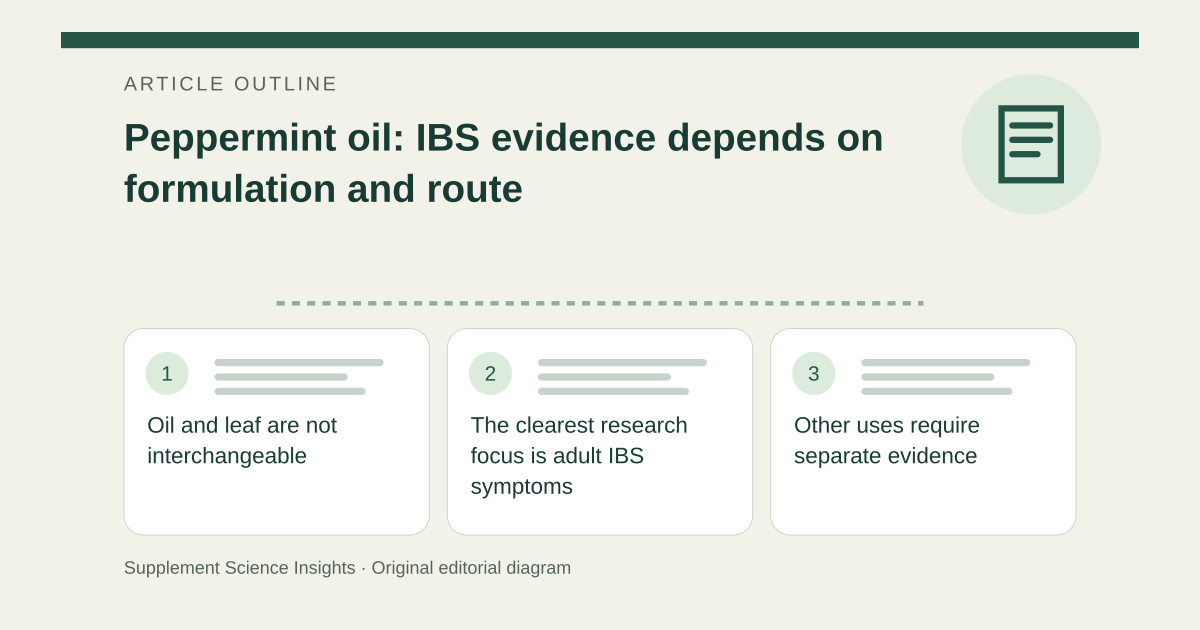
Oil and leaf are not interchangeable
Peppermint oil is a concentrated preparation, while peppermint tea uses leaves. Research on one should not automatically be attributed to the other. The route also matters: swallowing a capsule, inhaling a scent and applying a topical product ask different clinical questions. [1]
For oral products, enteric coating is a relevant formulation detail. It affects how the preparation is delivered and is often used to reduce upper-digestive adverse effects. A generic peppermint label does not establish a match to a studied capsule. [1]
The clearest research focus is adult IBS symptoms
NCCIH summarizes studies suggesting that enteric-coated peppermint-oil capsules can improve overall irritable bowel syndrome symptoms and abdominal pain in adults. Adverse effects occurred more often than with placebo in a summarized review, commonly reflux or indigestion. [1]
This evidence concerns symptom relief, not a cure or an explanation for every cause of abdominal pain. Findings for specific peppermint-and-caraway combinations in indigestion cannot establish that peppermint alone provides the same benefit. [1]
Other uses require separate evidence
Limited research has explored chemotherapy-related nausea, topical headache applications and procedural uses. These settings differ in route, supervision and background treatment. A result from one should retain those details rather than becoming a universal digestive or pain claim. [1]
Peppermint leaf has much less research than peppermint oil. A reader choosing tea for taste should not be told that the tea necessarily provides the effect observed with a specified capsule. Neither should an oral capsule be repurposed for skin or nasal use. [1]
Reflux and infant exposure are important cautions
Oral peppermint oil can cause heartburn, nausea, abdominal discomfort or dry mouth. Skin products may cause irritation or rash, and allergic reactions are possible. Enteric coating can help with some adverse effects but is not a guarantee that a preparation will be tolerated. [1]
Menthol-containing oil should not be applied to the face of infants or young children because inhalation can affect breathing. Medicinal-use information in pregnancy and breastfeeding is limited. Food-level experience does not establish safety for concentrated or differently applied products. [1]
Keep a combination formula intact
Imagine a fictional indigestion trial tests peppermint oil plus caraway oil. A peppermint-only capsule cannot claim the trial's complete effect because the contribution of caraway and the combination remains unresolved.
If the trial also uses a particular coating, an uncoated product differs in another way. The example identifies two applicability questions and does not recommend combining oils at home.
| Fictional trial detail | Comparison question |
|---|---|
| Peppermint plus caraway | Combination effect |
| Peppermint alone | Independent effect not isolated |
| Different coating | Delivery may differ |
Read the route before the benefit claim
A useful peppermint comparison begins with oil versus leaf, route and formulation. This overview does not diagnose IBS or recommend essential-oil ingestion instructions. It keeps promising symptom evidence attached to the actual preparations and populations studied.
Sources for this article
- NCCIH — Peppermint oil: Usefulness and Safety
Source consulted: 2026-09-17. This is a reference resource, not a claim that we conducted the studies or tested a product.