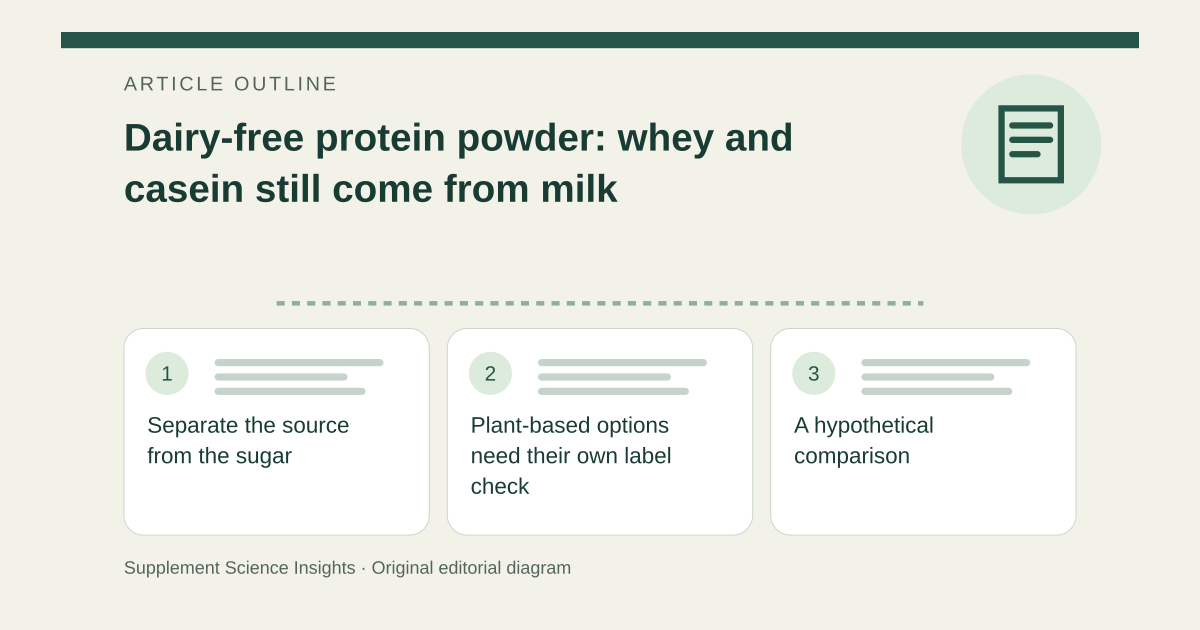
Separate the source from the sugar
NIDDK distinguishes lactose intolerance, a problem digesting milk sugar, from milk allergy, an immune response. Whey and casein powders are milk-derived even when processing reduces lactose. Mixing one with water or almond drink changes the recipe but not the source of its protein. [1][2]
Plant-based options need their own label check
Pea, soy or rice protein can provide alternatives to milk-derived protein. A finished blend may still contain other ingredients or require attention to cross-contact. Read the ingredient and allergen information for the exact product, and seek appropriate advice for a diagnosed allergy rather than relying on flavor or a broad marketing term. A plant source does not mean allergy-free. [3][1]
A hypothetical comparison
Imagine powder A lists whey isolate while powder B lists only a plant protein as its protein source. A’s reduced lactose would not establish absence of milk protein. B’s protein source answers one question, but its full formulation and allergy information still need checking. Neither description alone ranks effectiveness or purity. [1][3]
| Hypothetical description | What it establishes |
|---|---|
| Whey isolate | Milk-derived protein |
| Lactose-free | A sugar-related claim, not absence of milk protein |
| Plant protein | Named nonmilk protein source; inspect full formula |
Sources for this article
- Definition & Facts for Lactose Intolerance - NIDDK
Source consulted: 2026-09-20. This is a reference resource, not a claim that we conducted the studies or tested a product. - Whey vs. Casein Protein: Difference Explained | U.S. Dairy
Source consulted: 2026-09-20. This is a reference resource, not a claim that we conducted the studies or tested a product. - Dietary Supplements for Exercise and Athletic Performance - Health Professional Fact Sheet
Source consulted: 2026-09-20. This is a reference resource, not a claim that we conducted the studies or tested a product.