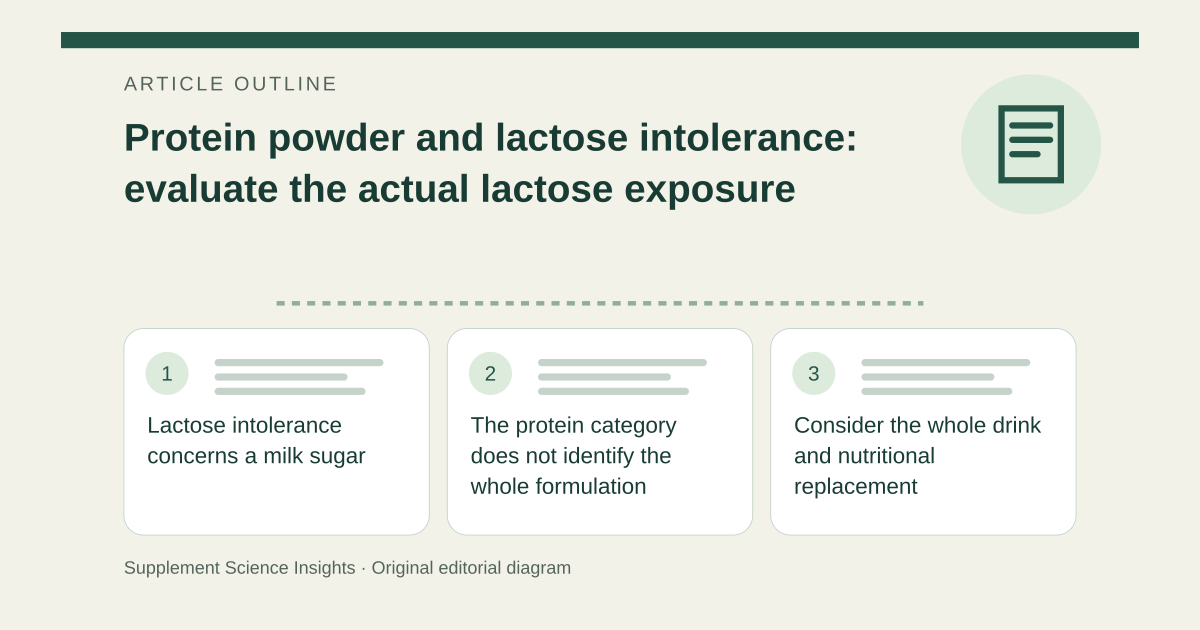
Lactose intolerance concerns a milk sugar
Lactose intolerance involves digestive symptoms related to lactose, the sugar in milk. NIDDK distinguishes it from milk allergy, which is an immune-system disorder. A lactose-free product can therefore address a different problem from the one faced by someone with milk allergy. [1][2]
Do not assume that removing lactose removes milk proteins. For an allergy, use the allergy-specific care plan and product information rather than applying lactose-intolerance advice. [1][2]
The protein category does not identify the whole formulation
NIDDK lists milk-based protein powders and bars among products that may contain lactose. Examine the full ingredients and any specific lactose information, rather than treating a general protein name as a zero-lactose guarantee. [1][2]
A plant-based protein ingredient also does not by itself establish that the finished blend contains no milk-derived ingredients. The complete formulation and preparation need to be considered. [1][2]
Consider the whole drink and nutritional replacement
People with lactose intolerance can tolerate different amounts; many can consume some lactose without significant symptoms. Lactose-free or lactose-reduced dairy products can be useful options. The amount and individual response matter. [1][2]
A powder mixed with ordinary milk may create a different exposure from the same powder mixed with a lactose-free liquid. If dairy is reduced substantially, preserve adequate calcium and vitamin D in the overall diet. [1][2]
A named option when avoiding dairy
Thorne describes its Plant Protein – Vanilla as a vegan, dairy-free blend of pea, brown rice and chia proteins. Its manufacturer page was checked on September 25, 2026. This makes it a candidate to compare when avoiding milk-based powder, rather than assuming every whey isolate is lactose-free. [3][4]
This is a manufacturer formulation claim, not an independent lactose assay or a guarantee of tolerance. Check the exact flavor and complete label, and use a suitable mixer. Milk allergy is different from lactose intolerance; someone with a milk allergy needs to check allergen and cross-contact information rather than rely on this example alone. [3][4]
The mixer can change the question
Imagine someone changes the powder but continues preparing each drink with a large serving of ordinary milk. That change does not isolate the powder as the cause of symptoms. Record all components when discussing the pattern with a clinician or dietitian.
| Information | Interpretation |
|---|---|
| Lactose intolerance | A digestion-related problem |
| Milk allergy | A different immune problem |
| Completed drink | Includes powder and mixer |
Sources for this article
- NIDDK: Eating, Diet, and Nutrition for Lactose Intolerance
Source consulted: 2026-09-17. This is a reference resource, not a claim that we conducted the studies or tested a product. - NIDDK: Definition and Facts for Lactose Intolerance
Source consulted: 2026-09-17. This is a reference resource, not a claim that we conducted the studies or tested a product. - Thorne: Plant Protein – Vanilla, formulation and dietary attributes
Source consulted: 2026-09-25. This is a reference resource, not a claim that we conducted the studies or tested a product. - NIDDK: lactose intolerance and milk allergy are different
Source consulted: 2026-09-25. This is a reference resource, not a claim that we conducted the studies or tested a product.