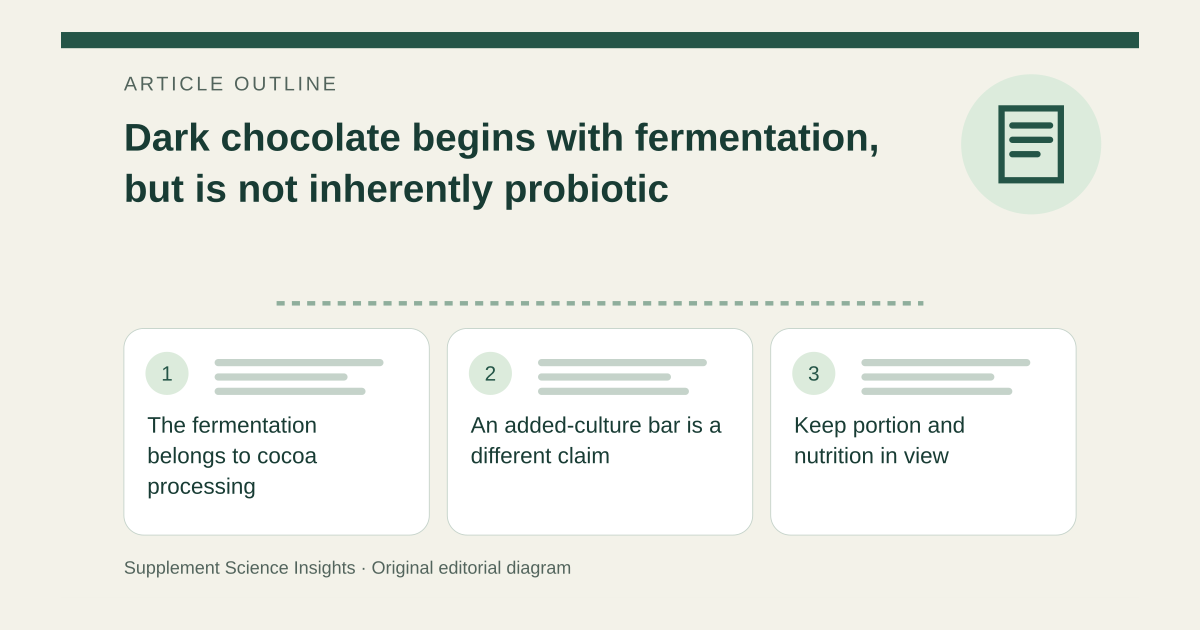
The fermentation belongs to cocoa processing
The ISAPP consensus classifies roasted chocolate beans among fermented foods without live fermentation organisms. That explains how chocolate can have a fermented origin while an ordinary finished bar is not a dependable live-culture food. [1]
An added-culture bar is a different claim
A manufacturer may formulate a product with added microorganisms. Assess that specific claim by strain, viable amount through shelf life and relevant evidence. Cocoa percentage, bitterness or premium branding cannot replace those details. Do not infer clinical benefit from the word probiotic alone. [2]
Keep portion and nutrition in view
Imagine choosing between a plain dark bar and an added-culture bar. Compare serving sizes, calories, saturated fat and added sugars on the actual packages; then assess any microbial claim separately. Fermented origin is not a reason to disregard what the portion contributes to your diet. [3]
| Situation | Interpretation |
|---|---|
| Roasted cocoa | Fermented origin without assured live cultures |
| Added strain | Evaluate the named organism and evidence |
| Higher cocoa percentage | Not a probiotic count |
Sources for this article
- The International Scientific Association for Probiotics and Prebiotics (ISAPP) consensus statement on fermented foods - PMC
Source consulted: 2026-09-20. This is a reference resource, not a claim that we conducted the studies or tested a product. - Probiotics - Health Professional Fact Sheet
Source consulted: 2026-09-20. This is a reference resource, not a claim that we conducted the studies or tested a product. - How to Understand and Use the Nutrition Facts Label | FDA
Source consulted: 2026-09-20. This is a reference resource, not a claim that we conducted the studies or tested a product.