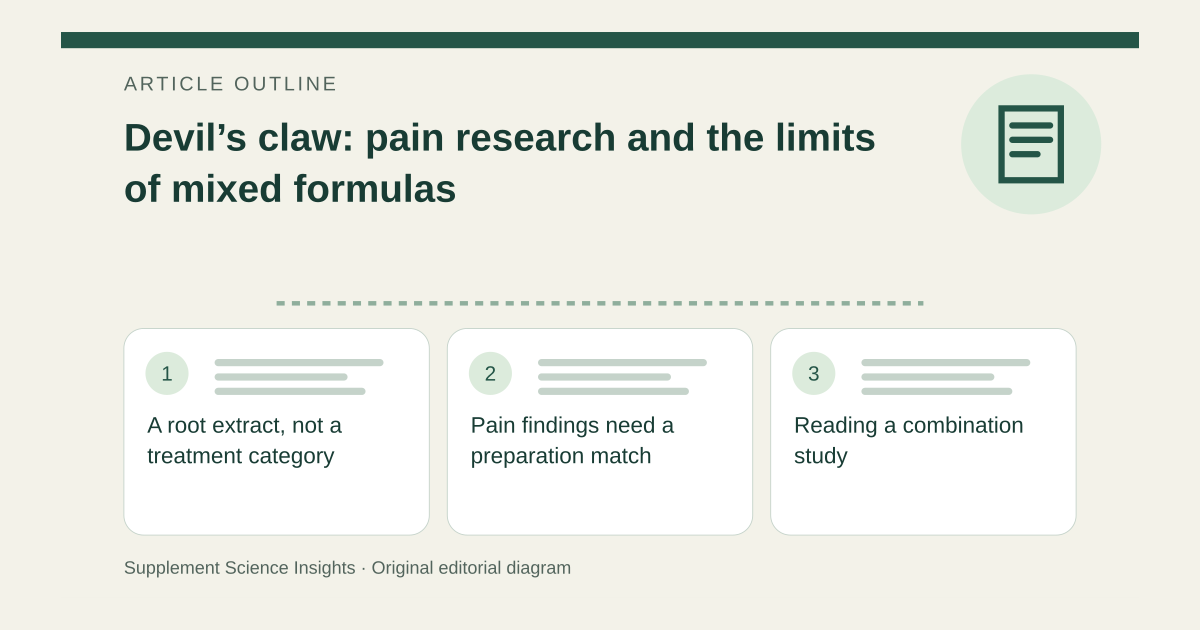
A root extract, not a treatment category
Devil’s claw refers to Harpagophytum procumbens, whose tuberous roots are used in supplements. Its traditional uses do not establish effectiveness for every condition included in marketing. [1]
Pain findings need a preparation match
MSK describes limited clinical evidence for osteoarthritis and back pain, including studies of formulas containing devil’s claw. Confirmatory studies are needed. A result from a combination cannot identify the contribution of this one ingredient. [1]
Reading a combination study
Imagine a trial reporting less knee pain after participants receive three ingredients. A second product contains only devil’s claw. The trial is relevant background, but it is not a direct test of the second product. The missing comparison is the single ingredient against an appropriate control under the same conditions.
| What a reader sees | What it actually supports |
|---|---|
| Combination improved symptoms | Individual ingredient contribution remains unresolved |
| One reported adverse event | Signals a concern, not a reliable incidence estimate |
Digestive and medication cautions
Indigestion, ulcers and gastrointestinal bleeding have been reported. MSK also describes a hypertension case and an observational pancreatitis signal; neither establishes how frequently harm occurs. Laboratory interaction findings involving drug-metabolizing enzymes or transporters have uncertain clinical significance. Review medication use and gastrointestinal history with a clinician before considering it. [1]
Separate symptom scores from broader claims
A pain score is a specific outcome. It does not by itself show repaired cartilage, prevention of future disability or benefit across unrelated pain conditions. Keep those questions separate when comparing an advertisement with a study abstract. This page does not recommend a product or a dosing schedule.
Sources for this article
- Memorial Sloan Kettering Cancer Center — Devil’s claw
Source consulted: 2026-09-17. This is a reference resource, not a claim that we conducted the studies or tested a product.