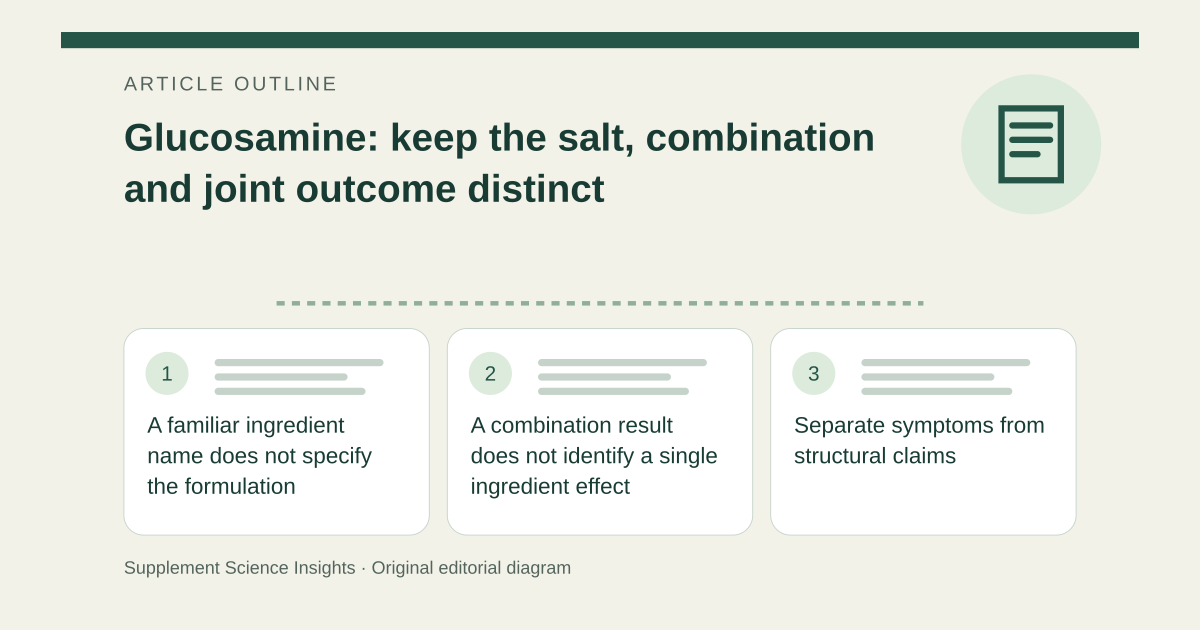
A familiar ingredient name does not specify the formulation
Glucosamine is sold in forms including sulfate and hydrochloride, alone or with ingredients such as chondroitin. NCCIH notes that some preparations are prescription products in other countries. These distinctions should remain visible when recording evidence. [1]
Copy the full ingredient wording, salt form, serving definition and all combination ingredients. Do not shorten a preparation name so aggressively that a study of one formulation appears to describe every product on a shelf. [1]
A combination result does not identify a single ingredient effect
Consider two invented labels: A contains glucosamine hydrochloride plus chondroitin, while B contains glucosamine sulfate alone. A trial of the complete A preparation would not by itself establish the effect of glucosamine alone or validate the B preparation.
Keep form and combination as separate fields in the comparison. The example supplies no recommended amount, bioavailability conversion or product ranking. Shared use of the word glucosamine does not resolve the differences.
| Field | Label A | Label B |
|---|---|---|
| Glucosamine form | Hydrochloride | Sulfate |
| Other active ingredients | Chondroitin | None stated |
| What a trial must identify | Exact combination | Exact single preparation |
| Interchangeability | Not established | Not established |
Separate symptoms from structural claims
NCCIH describes inconsistent research findings and differing expert evaluations for knee osteoarthritis. Effects on joint structure are also uncertain. A change in pain or function should not be rewritten as proof that a supplement rebuilds cartilage. [1]
For each claim, name the studied joint, participants, preparation, comparator and outcome. Evidence from a knee study does not automatically answer a question about the hip or hand. This article does not independently reconcile all clinical guidelines. [1]
Include warfarin and glucose-related concerns
NCCIH reports an association between glucosamine or chondroitin use and increased bleeding risk in people taking warfarin. Glucosamine may raise blood glucose in some people, and pregnancy and breastfeeding safety information is limited. [1]
Ask a clinician or pharmacist to review the actual product and medicine list. Do not change anticoagulant or diabetes treatment in response to a supplement label. This page provides no monitoring target, treatment substitution or personal safety clearance. [1]
Keep the source of each conclusion visible
A useful comparison sheet separates the product label, the original study and any later evidence review. Record whether a quoted conclusion concerns a single preparation or a mixed group of studies. Keep publication date and funding alongside it.
If two sources disagree, identify whether they examined the same formulation, population and outcome before treating them as directly contradictory. An unresolved comparison should remain unresolved rather than becoming a confident shopping recommendation.
Ingredient familiarity is not evidence of joint repair
The worked example illustrates why form and co-ingredients matter. It does not establish whether either fictional product improves symptoms, changes joint structure or is appropriate for an individual.
The government synthesis supports the cited background and cautions. Original trial appraisal, a current guideline reconciliation and independent scientific/editorial approval remain pending. Persistent joint symptoms need appropriate assessment rather than a label-based diagnosis.
Sources for this article
- NIH NCCIH — Glucosamine and Chondroitin for Osteoarthritis
Source consulted: 2026-09-17. This is a reference resource, not a claim that we conducted the studies or tested a product.