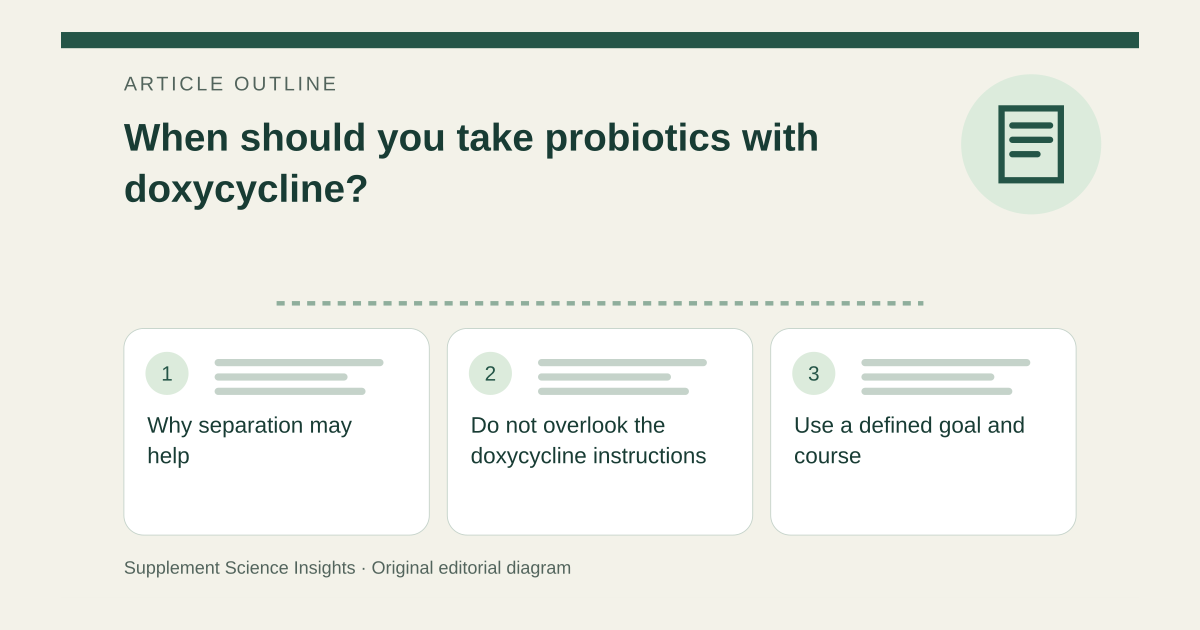
Why separation may help
ISAPP recommends considering a two-hour gap because many bacterial probiotics are sensitive to antibiotics. It explicitly notes that studies have not established the best dosing schedule. Yeast probiotics such as Saccharomyces differ because antibacterial antibiotics do not target them; that does not make them suitable for every person. [1]
Do not overlook the doxycycline instructions
NHS advises swallowing doxycycline tablets or capsules with water while upright and avoiding lying down for at least 30 minutes. Food instructions depend on the preparation and indication. Antacids and supplements containing iron or zinc can create separate interaction issues, so inspect combination-product ingredients rather than only the word probiotic. [2]
Use a defined goal and course
Some probiotics help prevent antibiotic-associated diarrhea, but they are not required for every doxycycline course. Starting near antibiotic initiation and continuing seven to fourteen days afterward are commonly studied strategies, not universal prescriptions. Long courses, immune impairment and serious illness need individualized review. [1]
Build around the prescription
Imagine doxycycline is scheduled morning and evening. Ask a pharmacist whether a proposed bacterial probiotic can fit between doses without complicating adherence. Do not move or skip antibiotic doses to create a supplement schedule, and do not assume probiotic spacing resolves a mineral interaction. [2][1]
| Question | Check |
|---|---|
| Will the antibiotic inactivate bacteria? | Consider a two-hour gap |
| Are minerals included? | Review their separate interaction |
| How is doxycycline swallowed? | Water, upright, leaflet instructions |
| Is a probiotic indicated? | Individual benefit and risk |
Sources for this article
- Probiotic use alongside antibiotics: A guide to clinical FAQs
Source consulted: 2026-09-21. This is a reference resource, not a claim that we conducted the studies or tested a product. - Doxycycline: antibiotic for bacterial infections - NHS
Source consulted: 2026-09-21. This is a reference resource, not a claim that we conducted the studies or tested a product.