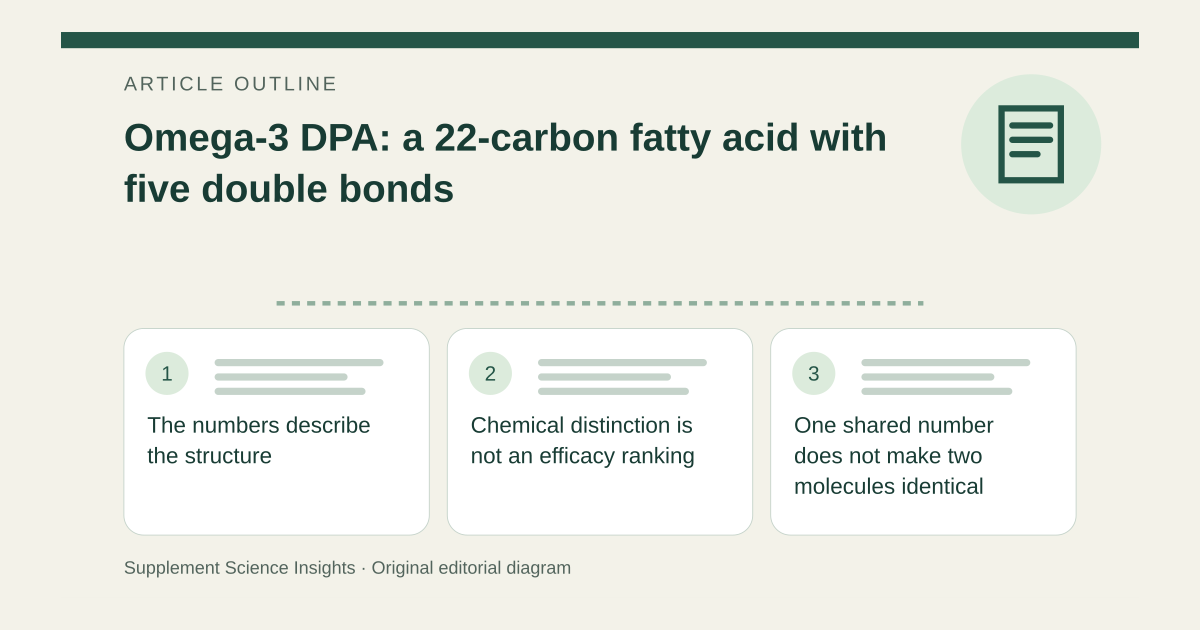
The numbers describe the structure
ChEBI identifies the omega-3 form as a 22-carbon fatty acid with five double bonds. By comparison, NIH ODS describes EPA as 20:5 n-3 and DHA as 22:6 n-3. [1][2]
The carbon count, number of double bonds and their positions all matter. A similar abbreviation is not enough to establish molecular identity or interchangeability. [1][2]
Chemical distinction is not an efficacy ranking
Identifying DPA in an oil tells you about composition. Demonstrating an added benefit requires evidence for the actual preparation, amount and clinical outcome. [1][2]
Do not add DPA, EPA and DHA names together as if more named components automatically meant better results. Quantities and the specific evidence remain necessary. [1][2]
One shared number does not make two molecules identical
Imagine DPA and DHA both have 22 carbons. DPA’s five double bonds and DHA’s six still distinguish their structures.
| Detail | Interpretation |
|---|---|
| EPA | 20:5 n-3 |
| DPA | 22:5 n-3 |
| DHA | 22:6 n-3 |
Sources for this article
- (7Z,10Z,13Z,16Z,19Z)-docosapentaenoic acid (CHEBI:53488)
Source consulted: 2026-09-18. This is a reference resource, not a claim that we conducted the studies or tested a product. - Omega-3 Fatty Acids - Health Professional Fact Sheet
Source consulted: 2026-09-18. This is a reference resource, not a claim that we conducted the studies or tested a product.