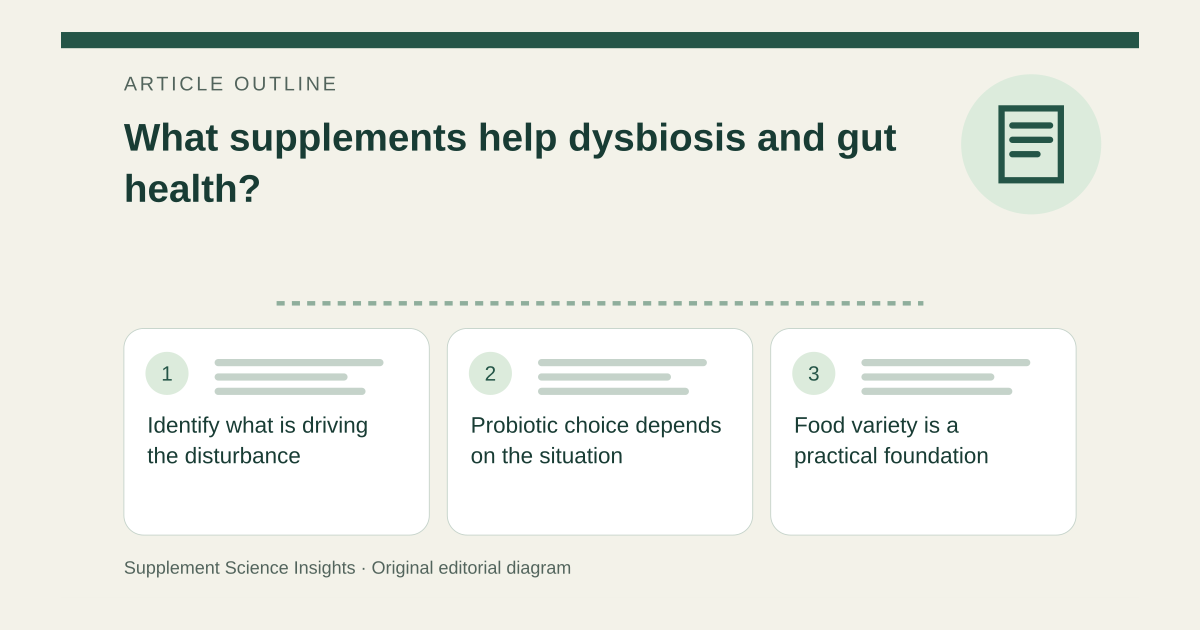
Identify what is driving the disturbance
Cleveland Clinic describes disease, infection, medicines and environmental factors as possible contributors. An identified infection or overgrowth may require specific treatment. A broad microbiome claim cannot determine whether the problem is IBS, inflammatory disease, infection or something else. [1]
Probiotic choice depends on the situation
A clinician may consider a specific probiotic or targeted nutrition, but that does not establish that the highest organism count or most strains is best. A product should match a defined purpose rather than an assumption that all bacteria need resetting. [1][2]
Food variety is a practical foundation
A varied plant-rich diet provides different fibers and nutrients for the microbial community. Individual tolerance and diagnosed disease still matter. Large sudden changes or multiple added powders can complicate symptom tracking rather than prove that the gut is healing. [1]
Use a focused plan and reassessment
Imagine bloating persists despite several probiotics. Review the symptoms, medicines and diet with a clinician instead of adding another blend. Treat an identified condition and make changes that can be evaluated, without expecting one product to permanently normalize every microbiome measurement. [1][2]
| Question | Practical interpretation |
|---|---|
| Dysbiosis label | Not one diagnosis |
| More strains | Not automatically better |
| Food variety | Useful within tolerance |
| Persistent symptoms | Assess the cause |
Sources for this article
- Dysbiosis: What It Is, Symptoms, Causes, Treatment & Diet
Source consulted: 2026-09-21. This is a reference resource, not a claim that we conducted the studies or tested a product. - Dietary Supplements: What You Need to Know - Consumer
Source consulted: 2026-09-21. This is a reference resource, not a claim that we conducted the studies or tested a product.