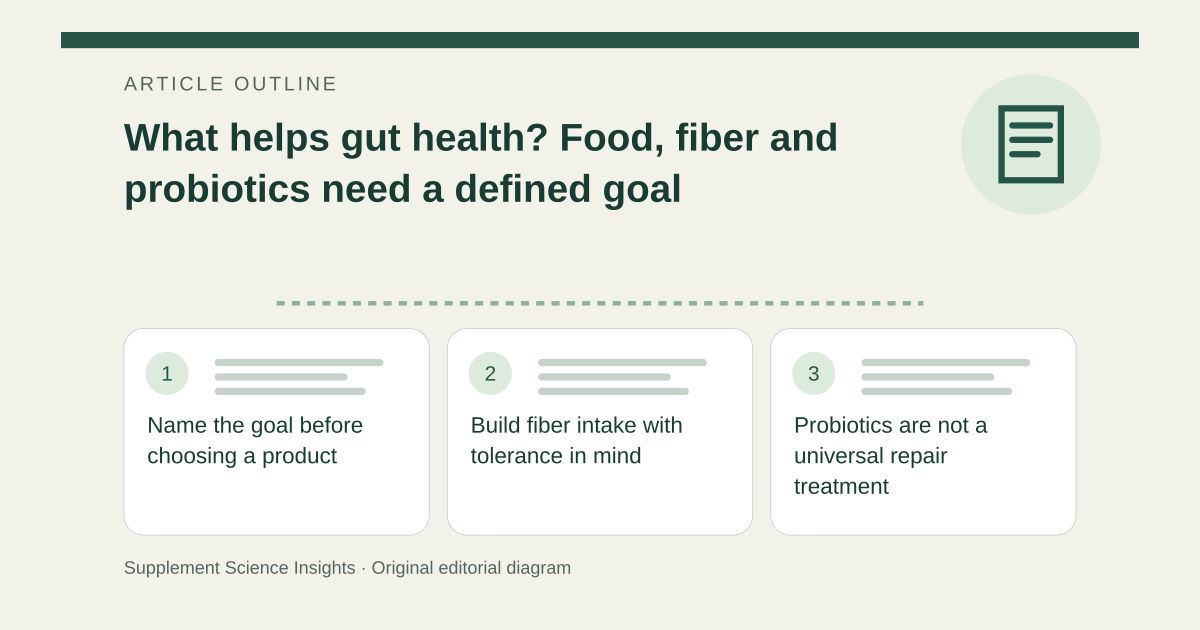
Name the goal before choosing a product
A varied food pattern and adequate dietary fiber support normal digestive function. Persistent pain, altered stools or other symptoms deserve an explanation rather than an assumption that the microbiome needs a reset. A supplement claim does not identify the diagnosis. [1][2]
Build fiber intake with tolerance in mind
Fiber-rich foods include whole grains, fruits, vegetables, nuts and seeds. Increase intake gradually because a rapid change can cause bloating or cramps. In IBS, dietary changes may need a structured trial and reintroduction with professional guidance rather than permanent broad restriction. [1][3]
Probiotics are not a universal repair treatment
NCCIH emphasizes that different organisms can have different effects. Benefit for one strain and condition does not establish that another product will heal the intestines. Review the exact preparation and outcome; people with serious illness or compromised immunity need particular caution because risks can be greater. [4]
Distinguish prebiotic and probiotic roles
Probiotics supply live microorganisms, while prebiotic claims concern substances used selectively by host microorganisms with a health benefit. Neither category name guarantees relief of a particular symptom. More ingredients do not eliminate the need for product-specific evidence. [4][5]
Treat the identified cause and use an appropriate timeline
Gas related to lactose intolerance, constipation and IBS can require different interventions. There is no general supplement schedule that proves the intestines are healed in a fixed number of days. Follow the outcome appropriate to the diagnosed problem and seek review if it persists. [6][3]
Avoid changing the entire plan at once
Imagine starting a restrictive diet, fiber powder and multi-strain probiotic together. Improvement or worsening cannot identify which change mattered. A staged plan with a defined symptom target and review point is easier to evaluate and maintain. [1][4][3]
| Goal | Useful next question |
|---|---|
| Normal bowel function | Is fiber intake adequate and tolerated? |
| Persistent symptoms | What is causing them? |
| Probiotic trial | Which preparation and outcome are supported? |
Sources for this article
- Dietary Fiber: MedlinePlus
Source consulted: 2026-09-20. This is a reference resource, not a claim that we conducted the studies or tested a product. - Dietary Supplements: What You Need to Know
Source consulted: 2026-09-20. This is a reference resource, not a claim that we conducted the studies or tested a product. - Eating, Diet, & Nutrition for Irritable Bowel Syndrome - NIDDK
Source consulted: 2026-09-20. This is a reference resource, not a claim that we conducted the studies or tested a product. - Probiotics: Usefulness and Safety | NCCIH
Source consulted: 2026-09-20. This is a reference resource, not a claim that we conducted the studies or tested a product. - What is a prebiotic? - International Scientific Association for Probiotics and Prebiotics (ISAPP)
Source consulted: 2026-09-20. This is a reference resource, not a claim that we conducted the studies or tested a product. - Treatment for Gas in the Digestive Tract - NIDDK
Source consulted: 2026-09-20. This is a reference resource, not a claim that we conducted the studies or tested a product.