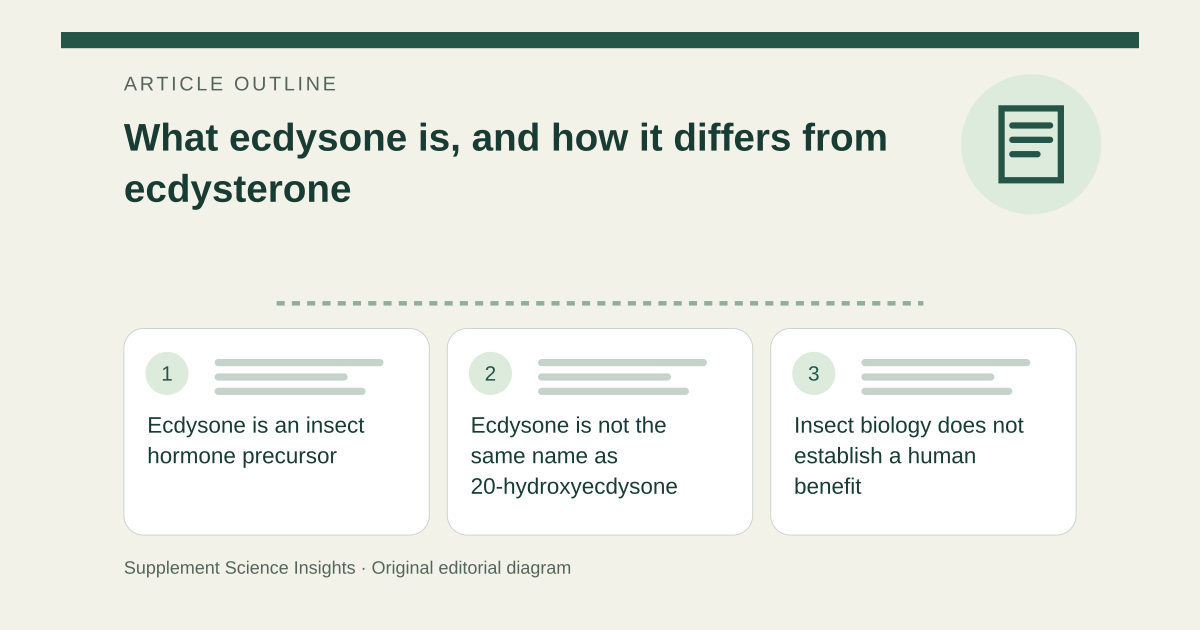
Ecdysone is an insect hormone precursor
Ecdysone is a steroid compound that acts as a prohormone of the major insect molting hormone, 20-hydroxyecdysone. Its role in insect development explains why it appears in discussions of ecdysteroids. It does not make ecdysone a human testosterone replacement. [1][2]
ChEBI records ecdysone as C27H44O6 and describes its steroid skeleton, hydroxyl groups and stereochemistry. The word steroid identifies a chemical framework; it does not mean that every steroid has the same receptor interactions or biological effects as testosterone. [1][2]
Ecdysone is not the same name as 20-hydroxyecdysone
The prefix “20-hydroxy” identifies a structural distinction, not a spelling variation that can be discarded. A source discussing the precursor and one discussing the hydroxylated hormone are not automatically studying identical material. Ecdysterone is commonly used for 20-hydroxyecdysone; the exact chemical identifier is the best way to check what a paper or product means. [1][2]
This matters when evaluating a supplement claim. Before transferring a finding, compare the named compound, purity, preparation and amount. A plant extract described only as containing ecdysteroids can contain a mixture, so its total extract weight cannot be treated as a measured amount of one identified compound without composition data. [1][2]
Insect biology does not establish a human benefit
A compound’s normal role in one organism is a starting point for research, not a demonstration that supplementation benefits another species. Establishing a human performance effect requires an appropriate study of the actual preparation in people, with a relevant comparison and outcome. [1][3]
The chemical database cited here establishes identity and biological classification. It does not establish a human supplementation dose, long-term safety or the effectiveness of a retail product. Likewise, a human study of a related ecdysteroid would need to be read on its own terms rather than relabeled as evidence for ecdysone. [1][3]
Checking a hypothetical label against a paper
Imagine a product lists “ecdysteroid extract,” while a paper names a purified 20-hydroxyecdysone preparation. The shared family name is insufficient to match the two. Request the exact compound identity and quantified amount, then compare the formulation with the research material. If those details are unavailable, record the mismatch instead of assuming that similarly named ingredients supply the same evidence. [1][3][2]
| Description | What remains to be checked |
|---|---|
| Ecdysone | Specific precursor identity |
| 20-hydroxyecdysone | Distinct hydroxylated compound; verify identifiers |
| Ecdysteroid extract | Composition and amount of each relevant compound |
Sources for this article
- ecdysone (CHEBI:16688)
Source consulted: 2026-09-20. This is a reference resource, not a claim that we conducted the studies or tested a product. - ChEBI — 20-hydroxyecdysone (ecdysterone)
Source consulted: 2026-09-20. This is a reference resource, not a claim that we conducted the studies or tested a product. - Dietary Supplements: What You Need to Know - Consumer
Source consulted: 2026-09-20. This is a reference resource, not a claim that we conducted the studies or tested a product.