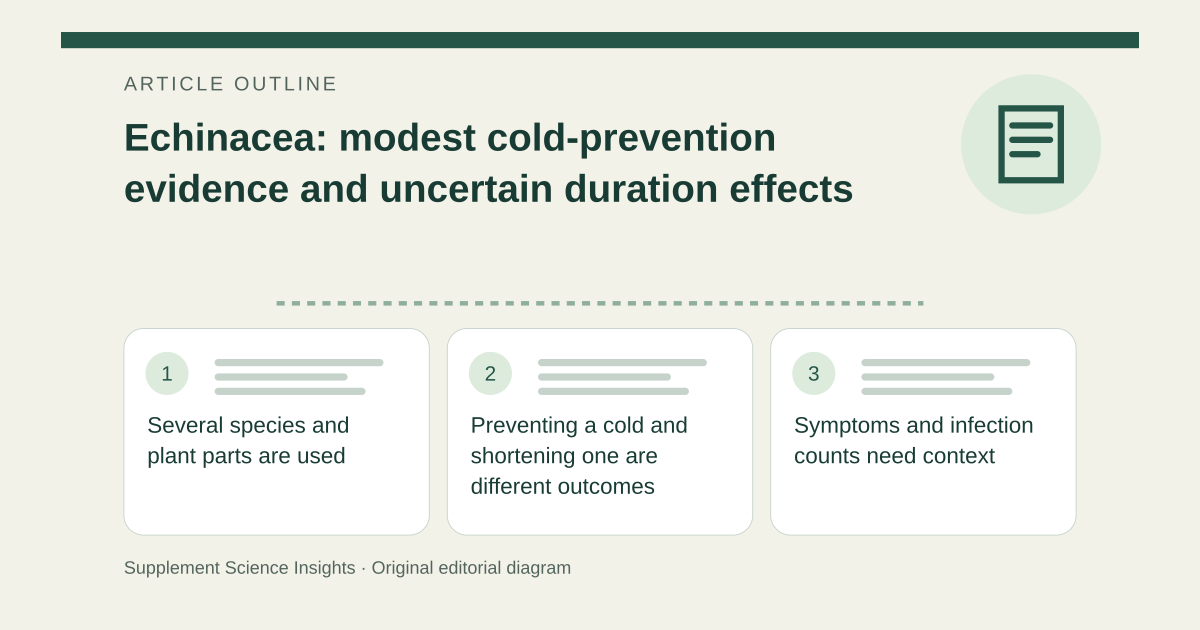
Several species and plant parts are used
Echinacea products may contain Echinacea purpurea, Echinacea angustifolia or other preparations involving different plant parts. Extracts, pressed juices and combination formulas are not automatically interchangeable. [1]
A useful study summary retains the exact preparation rather than shortening every intervention to echinacea. The botanical name, plant part and extraction details help determine whether a retail product is even comparable to the studied material. [1]
Preventing a cold and shortening one are different outcomes
NCCIH says echinacea may slightly reduce the chance of catching a cold, while it remains unclear whether it shortens a cold once present. Evidence for other health uses is uncertain. A preventive result should not be relabeled as a treatment effect. [1]
Timing matters: taking a preparation regularly before symptoms answers a different question from starting it after symptoms begin. A general statement that an herb “works for colds” conceals this distinction and can exaggerate what a study established. [1]
Symptoms and infection counts need context
A trial may count respiratory episodes, symptom days, severity or complications. Those outcomes are related but not interchangeable. The population, season, background prevention measures and definition of an episode all affect interpretation.
When the reported benefit is small, absolute numbers help. Knowing how many people became ill in each group is often more useful than a relative percentage alone. This page does not convert an uncertain overall literature into a guaranteed personal benefit.
Prevention trials and treatment trials use different denominators: the number of people who develop a cold versus the duration or severity among people already ill. Combining those outcomes can exaggerate the practical conclusion.
Allergy is a practical concern
Echinacea can cause allergic reactions, sometimes severe, and digestive symptoms. Children have developed rashes in trials, so pediatric use should be discussed with their clinician. Potential interactions, including with immunosuppressive medicines, require attention. [1]
Pregnancy and breastfeeding decisions also need individual guidance rather than a broad safety assumption. Short-term experience with one extract cannot establish safety for every species, combination or duration. [1]
A prevention result does not answer a treatment question
Imagine a fictional trial begins a product before the cold season and counts how many participants develop symptoms. Even if fewer become ill, it does not show that starting the same product after a cold begins shortens its duration.
A separate treatment study would need to define symptom onset, start time and recovery. The table separates those questions without claiming that either hypothetical trial has actually shown a benefit.
| Hypothetical design | Question answered |
|---|---|
| Started before illness; episodes counted | Prevention |
| Started after onset; recovery measured | Duration of existing illness |
Match the claim to the study timing
Ask whether the evidence concerns prevention, symptom severity or recovery time, and whether the preparation matches. For significant or persistent illness, do not let a supplement claim replace appropriate assessment. This overview does not recommend a brand or a cold-treatment schedule.
Sources for this article
- NCCIH — Echinacea: Usefulness and Safety
Source consulted: 2026-09-17. This is a reference resource, not a claim that we conducted the studies or tested a product.