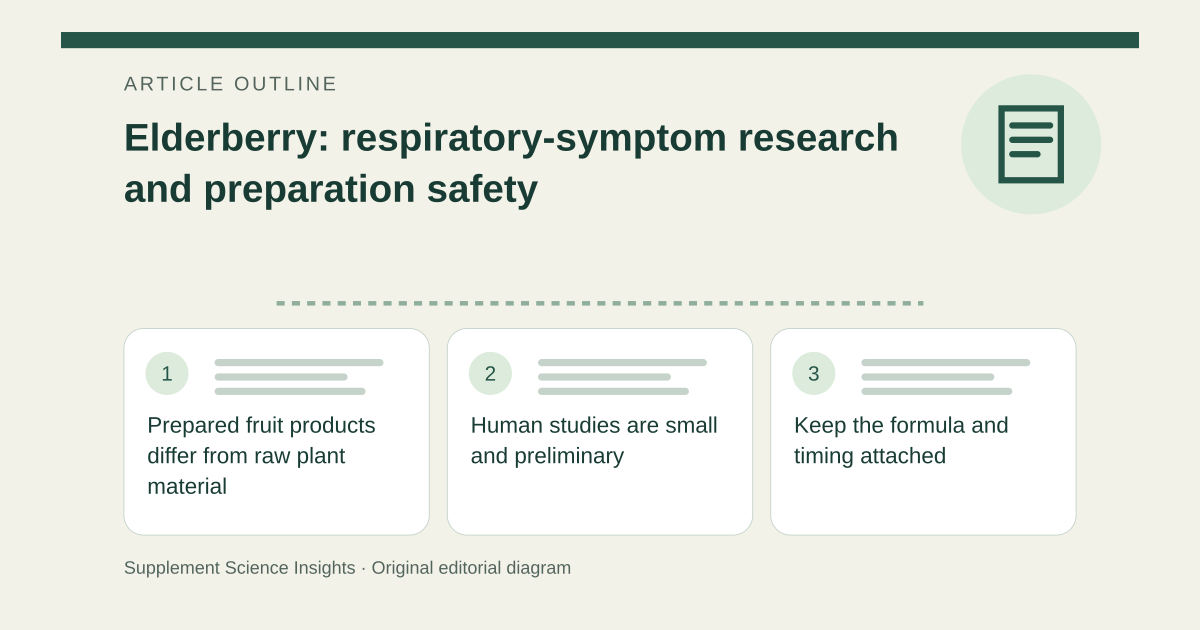
Prepared fruit products differ from raw plant material
Elderberry products are commonly made from Sambucus fruit and sold as syrups, gummies, lozenges or extracts. Raw or unripe berries and other plant parts can contain cyanide-producing compounds. Properly prepared commercial food products should not be equated with homemade raw mixtures. [1]
Botanical identity, plant part and processing therefore matter before considering a clinical claim. The berry name by itself does not describe the complete product. [1]
Human studies are small and preliminary
NCCIH describes a limited number of studies suggesting possible relief of some upper-respiratory symptoms. That evidence does not establish that elderberry prevents infection, treats influenza in place of indicated therapy or is effective against COVID-19. [1]
An improvement in a symptom score is not proof that a product directly inhibits a virus in people. A laboratory antiviral finding and a patient outcome require separate descriptions rather than being combined into one claim. [1]
Keep the formula and timing attached
Syrups and gummies may include additional vitamins, minerals or herbs. A study of one combination cannot identify elderberry's independent contribution, and a result after early symptom onset may not apply to later use.
For a practical comparison, record the extract, serving definition, other active ingredients and treatment timing. A fruit-equivalent number cannot supply missing clinical information or establish that a current retail product matches a researched formulation.
Season, circulating viruses and access to other treatment can affect respiratory-study results. A finding in one short seasonal trial therefore needs confirmation before being generalized to every respiratory infection or age group.
Raw preparations can be hazardous
Raw or unripe elderberries, leaves and stems can cause nausea, vomiting and severe diarrhea because of toxic cyanogenic substances. This page does not provide a home-processing method or claim that an improvised preparation is safe. [1]
Medicines and underlying illness should be discussed with the care team, and pregnancy or breastfeeding safety for medicinal use is poorly established. A familiar syrup format does not make a supplement suitable for every child or adult. [1]
A symptom score is only one outcome
Imagine a hypothetical trial records a lower average symptom score on day three but finds no difference in time to recovery. An accurate summary would report both findings rather than saying participants recovered faster.
If the product also contained zinc, that ingredient remains part of the intervention. These invented results illustrate how to read a claim; they are not evidence for an elderberry brand or an instruction to combine supplements.
| Hypothetical result | Accurate wording |
|---|---|
| Lower day-three score | Some symptom difference |
| Same recovery time | Do not claim faster recovery |
| Formula includes zinc | Combination intervention |
Keep illness management in view
Respiratory symptoms can have different causes and levels of severity. A supplement should not delay assessment or indicated treatment. The useful evidence question is whether the exact preparation improved a meaningful outcome, with harms and uncertainties reported alongside any benefit.
Sources for this article
- NCCIH — Elderberry: Usefulness and Safety
Source consulted: 2026-09-17. This is a reference resource, not a claim that we conducted the studies or tested a product.