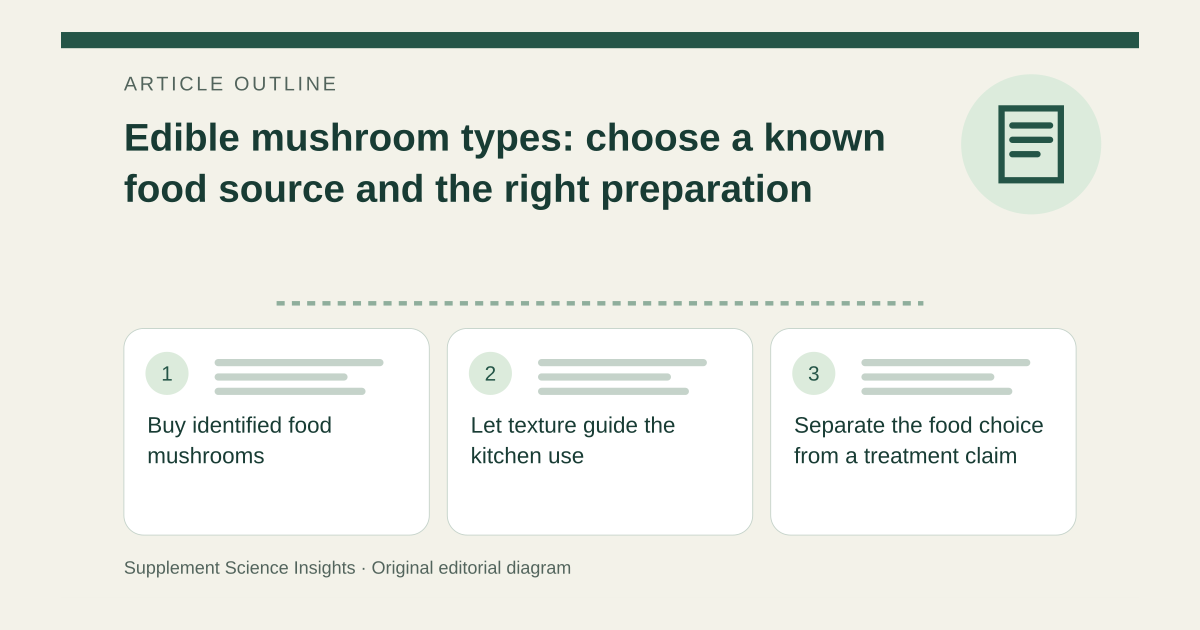
Buy identified food mushrooms
University-extension guidance recommends reputable growers or grocers because misidentification of wild mushrooms can be dangerous. A cap color, photograph or resemblance to a shop mushroom is not enough to establish edibility. Cooking and drying do not reliably remove the toxins of poisonous species. [1][2]
Let texture guide the kitchen use
Small pieces can be sautéed or added to soups, while larger caps can suit grilling or broiling. Some stems, including those of shiitake, can be tough and are often removed or used for flavoring rather than served as tender pieces. Follow the preparation appropriate to the particular edible mushroom instead of treating every variety identically. [2]
Separate the food choice from a treatment claim
Imagine choosing between shiitake for a soup and a large portobello cap for grilling. That is a culinary decision. It does not show that either meal provides the same preparation or dose as a mushroom extract studied for a health outcome. Keep food enjoyment, nutritional contribution and therapeutic claims as distinct questions. [2][3]
| Example | Interpretation |
|---|---|
| Known cultivated variety | Starting point for food preparation |
| Similar-looking wild mushroom | Not identified by resemblance |
| Food serving | Not equivalent to a supplement extract |
Sources for this article
- Preparing and Preserving Mushrooms
Source consulted: 2026-09-20. This is a reference resource, not a claim that we conducted the studies or tested a product. - Fruit and Vegetable Guide Series: Mushrooms | USU
Source consulted: 2026-09-20. This is a reference resource, not a claim that we conducted the studies or tested a product. - Dietary Supplements: What You Need to Know
Source consulted: 2026-09-20. This is a reference resource, not a claim that we conducted the studies or tested a product.