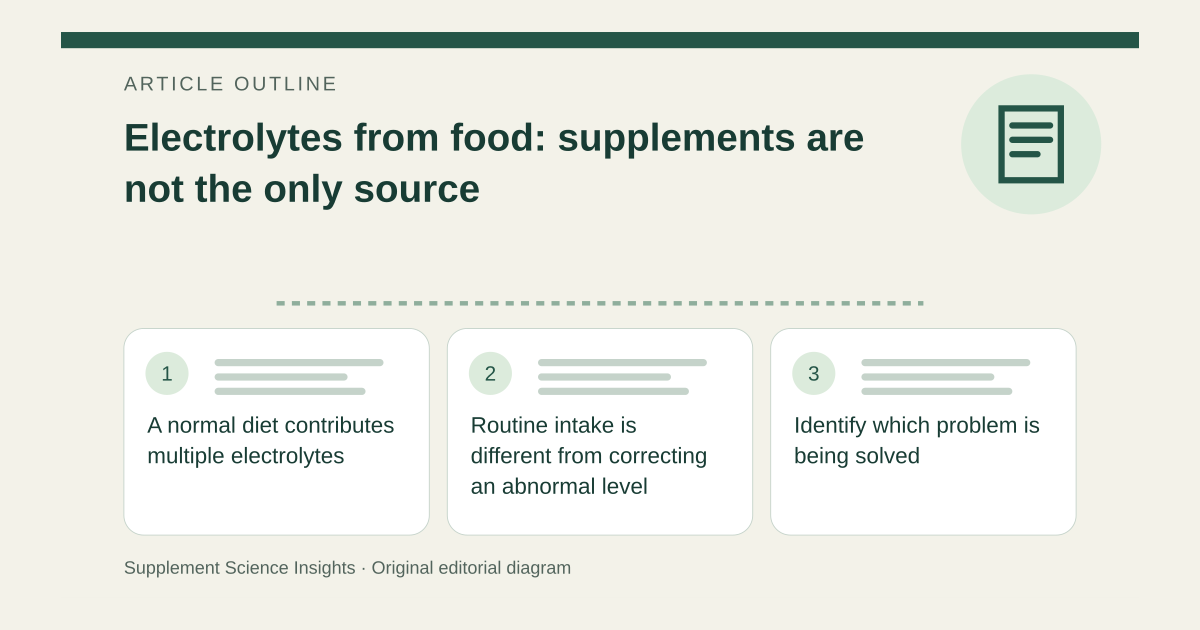
A normal diet contributes multiple electrolytes
MedlinePlus lists sodium, potassium, calcium, magnesium, chloride, phosphate and bicarbonate among the body’s major electrolytes. It explains that foods and fluids contribute to electrolyte supply. [1][2]
For example, NIH ODS identifies potassium in legumes, potatoes, dairy foods and many fruits and vegetables. An electrolyte-branded powder is not the only way to obtain dietary minerals. [1][2]
Routine intake is different from correcting an abnormal level
A diagnosed electrolyte disturbance is a medical question, not simply a reason to maximize all minerals together. Fluid status and the cause of the abnormality matter. [1][2]
Foods can support ordinary nutrition, but this page does not prescribe treatment for dehydration, kidney disease or an abnormal blood result. A general food list cannot replace an individualized replacement or restriction plan. [1][2]
Identify which problem is being solved
Imagine someone compares a usual meal with a product marketed for electrolytes. Nutrient contribution can be compared, but neither option alone establishes treatment for a low laboratory value.
| Detail | Interpretation |
|---|---|
| Dietary supply | Foods and fluids contribute |
| Blood imbalance | Different clinical question |
| More of every mineral | Not an automatic solution |
Sources for this article
- Fluid and Electrolyte Balance: MedlinePlus
Source consulted: 2026-09-18. This is a reference resource, not a claim that we conducted the studies or tested a product. - Potassium - Health Professional Fact Sheet
Source consulted: 2026-09-18. This is a reference resource, not a claim that we conducted the studies or tested a product.