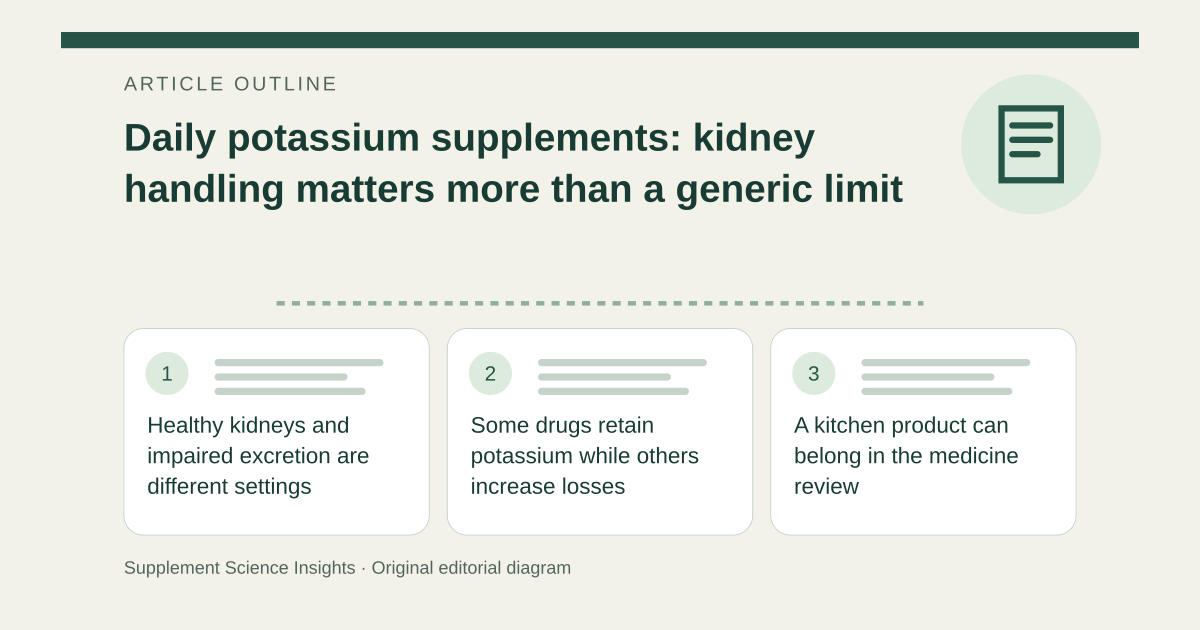
Healthy kidneys and impaired excretion are different settings
ODS explains that healthy kidneys usually adapt to dietary potassium by excreting more in urine. In chronic kidney disease or with medicines that reduce excretion, even ordinary intake levels can contribute to high blood potassium. [1]
The absence of a general upper limit reflects insufficient evidence for setting one, not proof that any supplemental amount is safe. Very large supplement or potassium-based salt-substitute exposures can overwhelm excretion even in otherwise healthy people. [1]
Some drugs retain potassium while others increase losses
ACE inhibitors, angiotensin receptor blockers and potassium-sparing diuretics can raise potassium by reducing urinary loss. Loop and thiazide diuretics can have the opposite effect. The term blood-pressure pill does not identify which situation applies. [1]
Include salt substitutes, electrolyte products and prescribed potassium in the review. High potassium can be asymptomatic but can also cause dangerous heart-rhythm effects. A symptom checklist cannot establish a safe level or a self-treatment dose. [1]
A kitchen product can belong in the medicine review
Imagine someone reports no potassium tablets but regularly uses a potassium-containing salt substitute. The exposure remains relevant, particularly after a medicine change. Bring the ingredient label and actual use to the clinician rather than excluding it because it is kept with food.
| Entry | Meaning |
|---|---|
| Potassium tablets | Include |
| Electrolyte products | Check ingredients |
| Potassium salt substitute | Also relevant |
Sources for this article
- NIH ODS: Potassium
Source consulted: 2026-09-17. This is a reference resource, not a claim that we conducted the studies or tested a product.