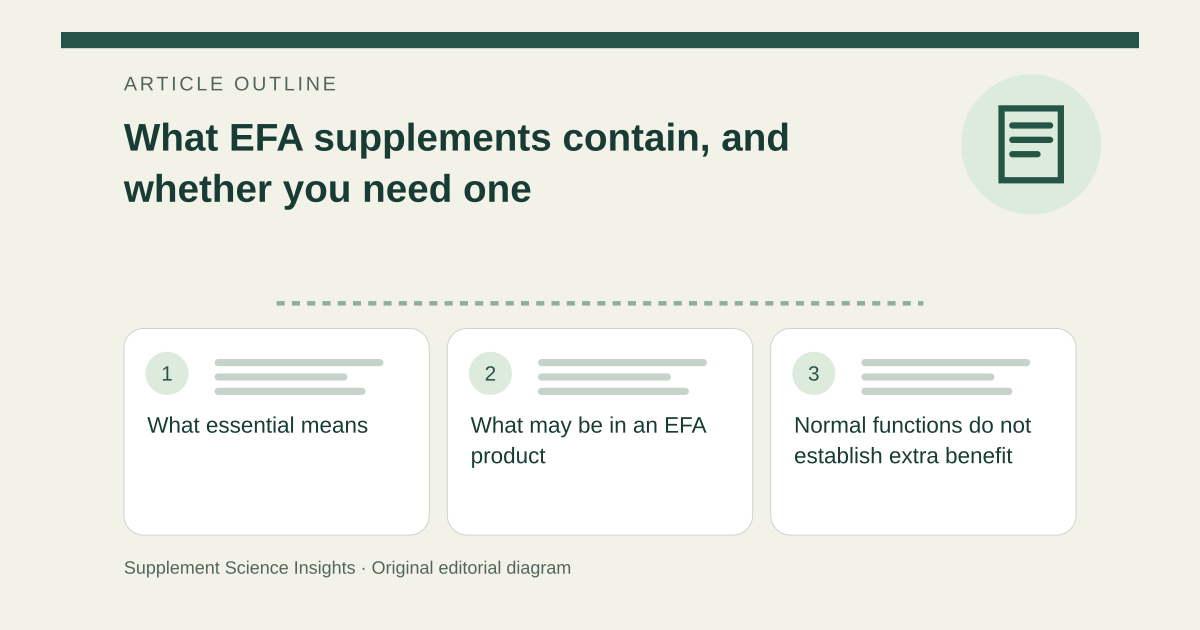
What essential means
EFA stands for essential fatty acid. In human nutrition, linoleic acid, an omega-6 fatty acid, and alpha-linolenic acid, an omega-3 fatty acid, are essential because the body cannot make enough of these starting fatty acids through its own synthetic pathways. They must be obtained from the diet. [1]
“Essential” describes a nutrient requirement. It does not mean a bottle carrying that word is essential for every person. Foods containing appropriate fats can supply essential fatty acids without a dedicated supplement. [1]
What may be in an EFA product
The term EFA is used for different oil mixtures rather than one uniform formulation. A product might emphasize ALA-containing plant oils or include marine long-chain omega-3s such as EPA and DHA. Read the named fatty acids and their amounts rather than assuming that the front label specifies a complete mixture. [1]
EPA and DHA are related to ALA, but the body's conversion of ALA into them is limited. They should not be counted as chemically identical entries when comparing products. Nor does a larger total oil amount establish more of the fatty acid of interest. [1]
Normal functions do not establish extra benefit
Fatty acids are components of cell membranes and participate in many biological processes. A deficient diet and an already adequate diet are different starting points. Correcting inadequate intake is not the same clinical question as adding more oil to improve an unrelated symptom. [1]
NIH describes essential-fatty-acid deficiency as uncommon in healthy people consuming ordinary diets. People with particular absorption or nutrition problems may need individualized assessment. This is different from inferring a deficiency from a broad symptom or from an advertisement. [1]
A hypothetical food-and-supplement comparison
Imagine a person comparing an ALA-rich oil with an EPA-and-DHA product. First identify the nutritional goal and what their diet already provides. Then compare the relevant fatty acids per serving. An EFA label alone cannot show that either product addresses an actual gap. [1]
| Name | Meaning |
|---|---|
| Linoleic acid | Essential omega-6 fatty acid |
| Alpha-linolenic acid | Essential omega-3 fatty acid |
| EPA and DHA | Long-chain omega-3s; distinct from ALA |
Sources for this article
- Omega-3 Fatty Acids - Health Professional Fact Sheet
Source consulted: 2026-09-20. This is a reference resource, not a claim that we conducted the studies or tested a product.