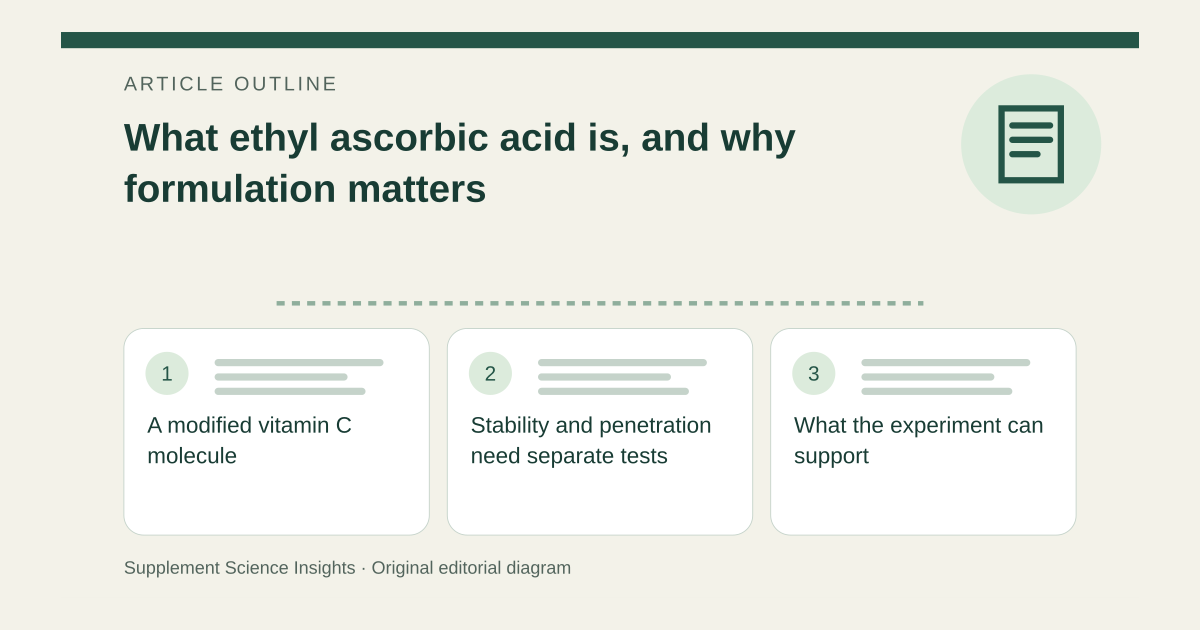
A modified vitamin C molecule
3-O-ethyl ascorbic acid is an ascorbic-acid derivative with an ethyl group attached through the oxygen at the 3 position. It is often shortened to ethyl ascorbic acid or ethylated vitamin C in cosmetic descriptions. This identifies a particular chemical derivative, not every vitamin C ingredient used on skin. [1]
The modification is intended to make the ingredient useful in formulations where ordinary ascorbic acid can be difficult to stabilize. Calling it a stable derivative does not mean it is indestructible, equally stable in every solvent or interchangeable with dietary vitamin C. [1]
Stability and penetration need separate tests
A 2019 original formulation study characterized the molecule and examined its solubility, stability and movement into or through isolated porcine ear skin. The researchers compared solvent vehicles containing the same derivative. This was a laboratory delivery experiment, not a trial of wrinkle reduction or pigment treatment in people. [1]
Some vehicles produced detectable permeation through skin, while others showed uptake without comparable through-skin delivery. That distinction matters: dissolving an ingredient in a bottle, depositing it in skin and producing a visible clinical change are different outcomes. [1]
What the experiment can support
The skin experiments used 2% solutions, finite dosing and at least five replicate experiments, with measurements over 24 hours. Those details define a laboratory comparison; the replicates are not a sample of five human patients. The authors also noted low recovery in some conditions and called for more investigation of stability and degradation products. [1]
The work received EPSRC funding with GlaxoSmithKline support, and materials were supplied by companies. These relationships and the isolated-skin design limit what can be inferred about a finished retail serum. A serum with several additional ingredients is not the same test system. [1]
What this means for a skin-care claim
A product can reasonably identify the derivative it contains, but the ingredient name alone does not establish a particular reduction in discoloration, a collagen increase or superiority over another vitamin C product. Those claims require relevant finished-formulation evidence. [1]
Likewise, an absorption finding does not replace sunscreen testing or prove that a product provides SPF protection. The inspected study addresses chemistry and delivery. It does not establish a universal recommended concentration, personal treatment plan or clinical safety profile for every formulation. [1]
A hypothetical two-serum comparison
Imagine two serums each declare 2% ethyl ascorbic acid but use different solvents and other ingredients. Matching concentration does not prove matching skin delivery. The study provides a reason to examine formulation-specific evidence rather than ranking the products from the percentage alone. [1]
| Measurement | What it establishes |
|---|---|
| Solubility | How much dissolves in a specified vehicle |
| Skin uptake or permeation | Delivery under experimental conditions |
| Clinical outcome | Requires a relevant study in people |
Sources for this article
- 3-O-ethyl-L-ascorbic acid: characterisation and skin-delivery experiments (2019)
Source consulted: 2026-09-20. This is a reference resource, not a claim that we conducted the studies or tested a product.