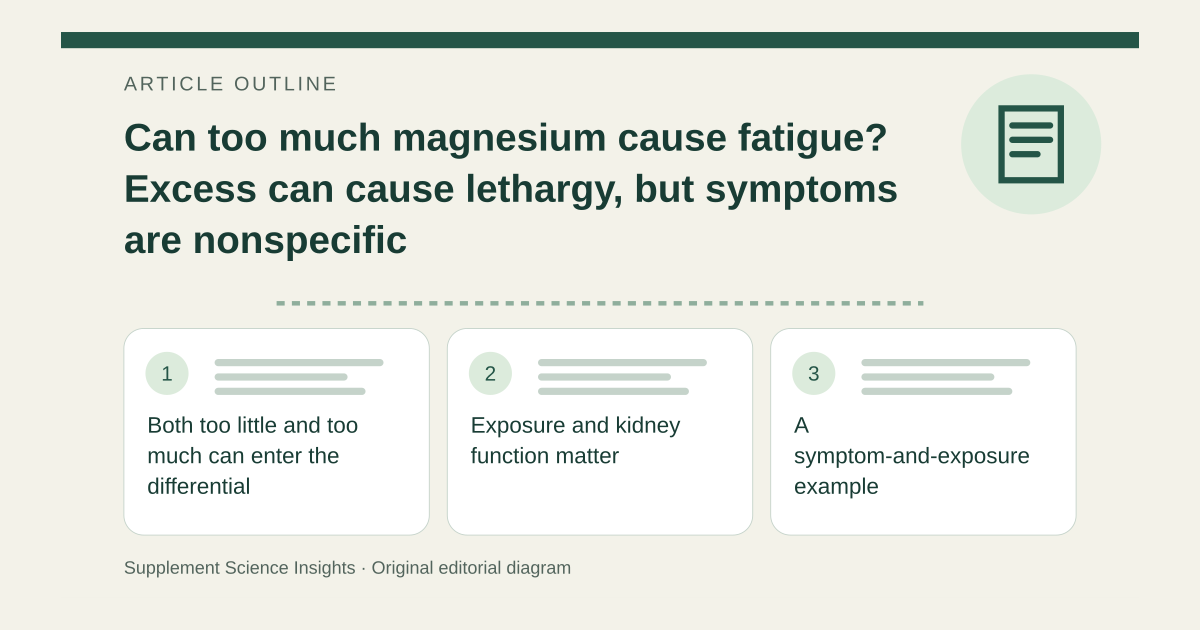
Both too little and too much can enter the differential
NIH ODS lists fatigue and weakness among early deficiency symptoms and lethargy or weakness among toxicity manifestations. Therefore tiredness is not a reliable signal to increase a supplement. It also has many causes unrelated to magnesium, which this symptom alone cannot distinguish. [1]
Exposure and kidney function matter
Severe excess is more concerning with large supplemental or medicinal exposure and impaired kidney clearance. A magnesium-containing laxative or antacid belongs in the history even if it is not called a supplement. The ordinary nutritional role of magnesium in energy metabolism does not make extra intake a universal fatigue treatment. [1]
A symptom-and-exposure example
Imagine marked weakness appears after repeated magnesium laxative use in someone with kidney disease. That needs prompt medical assessment, especially with breathing problems, low blood pressure symptoms or an irregular heartbeat. Someone with chronic unexplained fatigue and no such exposure still needs evaluation rather than diagnosing either excess or deficiency from the symptom. [1]
| Hypothetical finding | Interpretation |
|---|---|
| Fatigue alone | Nonspecific |
| Large nonfood exposure plus kidney disease | Higher concern for excess |
| Severe weakness or breathing difficulty | Urgent assessment |
Sources for this article
- Magnesium - Health Professional Fact Sheet
Source consulted: 2026-09-20. This is a reference resource, not a claim that we conducted the studies or tested a product.