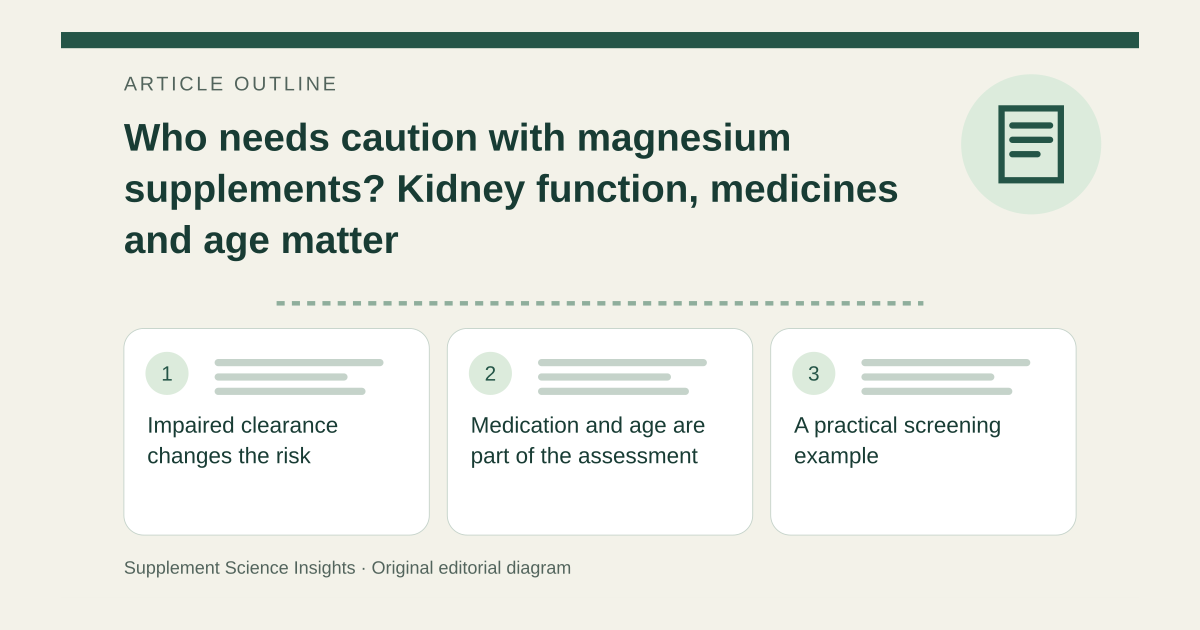
Impaired clearance changes the risk
Kidney impairment or failure can reduce removal of excess magnesium and increase toxicity risk. Someone with kidney disease should not assume an over-the-counter product is suitable simply because magnesium is an essential nutrient. Medicinal laxatives and antacids can contribute substantial amounts as well. [1]
Medication and age are part of the assessment
Magnesium can reduce absorption of some oral antibiotics and bisphosphonates; other medicines alter magnesium status. Children have lower age-specific nonfood upper limits. These issues need the actual medication list, formulation and elemental amount. A general adult limit does not establish a pediatric regimen or resolve a drug interaction. [1]
A practical screening example
Imagine someone plans a nightly magnesium product while already using a magnesium-containing antacid and taking a prescription medicine. Record all three, including amounts and timing, and have a pharmacist or clinician assess the combination. For most healthy people, natural food magnesium is not subject to the same supplemental upper limit; avoiding every magnesium-rich food is not the default response to supplement cautions. [1]
| Hypothetical factor | Why it changes the review |
|---|---|
| Kidney disease | Clearance and toxicity |
| Another magnesium medicine | Cumulative nonfood exposure |
| Child or interacting prescription | Age- or drug-specific assessment |
Sources for this article
- Magnesium - Health Professional Fact Sheet
Source consulted: 2026-09-20. This is a reference resource, not a claim that we conducted the studies or tested a product.