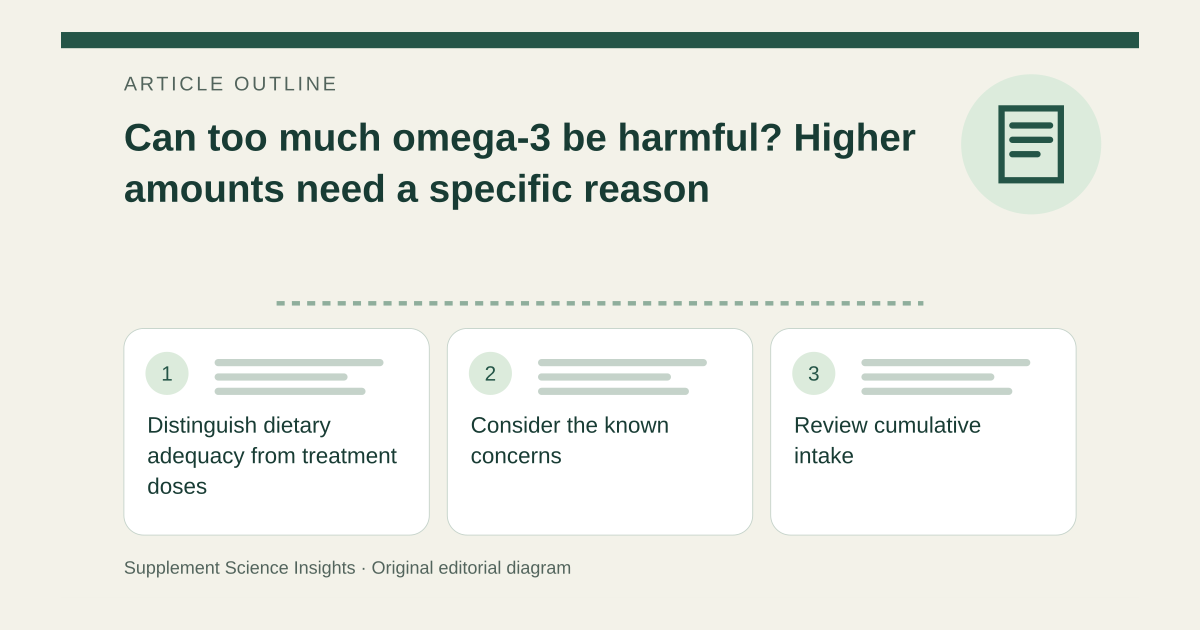
Distinguish dietary adequacy from treatment doses
ALA, EPA and DHA are related but distinct fatty acids. Ordinary foods, supplements and prescription products provide different exposures. A high amount used for a specific clinical indication is not a general wellness target, and a safety assessment in one study population is not a recommendation for everyone. [1]
Consider the known concerns
ODS describes gastrointestinal adverse effects and medication review, particularly with anticoagulant treatment. It also discusses increased atrial-fibrillation risk in some higher-dose trials in people with cardiovascular disease or elevated risk. Those findings need their population and formulation context; they do not mean every low-dose user will have that outcome. [1]
Review cumulative intake
Imagine a person takes a prescription omega-3 medicine and adds several retail capsules because both sound heart-healthy. The extra product changes exposure without establishing added benefit. Bring the actual labels to the prescriber and do not increase intake to chase a biomarker or general anti-inflammatory claim on your own. [1]
| Illustration | Interpretation |
|---|---|
| More capsules | More exposure, not guaranteed benefit |
| Anticoagulant use | Review the combination |
| Prescription plus retail oil | Avoid unplanned duplication |
Sources for this article
- Omega-3 Fatty Acids - Health Professional Fact Sheet
Source consulted: 2026-09-20. This is a reference resource, not a claim that we conducted the studies or tested a product.