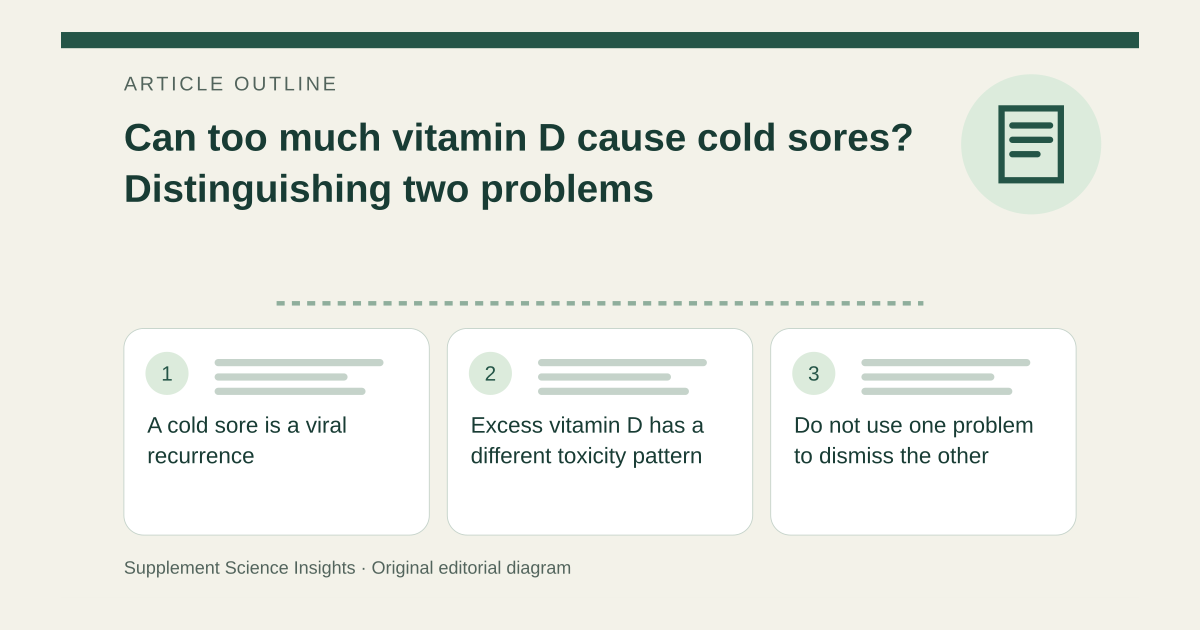
A cold sore is a viral recurrence
NHS describes cold sores as herpes simplex infections that can recur after the virus remains in the body. Illness, sunlight and menstrual periods can trigger episodes in some people. Timing after a new supplement may be a clue to discuss, but it cannot establish the cause without considering other changes. [1]
Excess vitamin D has a different toxicity pattern
NIH emphasizes excessive calcium levels from too much supplemental vitamin D. Symptoms can include nausea, weakness, thirst and frequent urination, with serious kidney and other complications in severe cases. Cold sores are not a characteristic toxicity sign described in that guidance; this is not proof that an individual reaction is impossible. [2]
Do not use one problem to dismiss the other
Someone taking a very high dose should review the actual amount, duration and other sources of vitamin D even if the lip lesion has a separate viral explanation. Conversely, a recurrent cold sore does not automatically diagnose vitamin D toxicity. The usual adult upper intake level is 4,000 IU daily, not a guaranteed safety threshold for every clinical situation. [2]
Seek care when the lesion needs it
NHS advises clinical review when a cold sore has not started healing within ten days, is very large or painful, or occurs in someone with a weakened immune system. Avoid sharing items or kissing while a lesion is active, and seek appropriate treatment rather than repeatedly changing a vitamin dose. [1]
Consider the whole timeline
Imagine a cold sore appears after a sunny holiday and a new high-dose supplement. Sun exposure and the supplement history both deserve consideration, but they raise different questions. Review safe vitamin intake and manage the viral lesion without assuming that one proves the cause of the other. [1][2]
| Observation | Relevant next question |
|---|---|
| Cold sore after a new supplement | What other triggers or changes occurred? |
| High total vitamin D dose | Is toxicity assessment needed? |
| Thirst and frequent urination | Could calcium be elevated? |
| Persistent or severe lesion | Does it need clinical treatment? |
Sources for this article
- Cold sores - NHS
Source consulted: 2026-09-21. This is a reference resource, not a claim that we conducted the studies or tested a product. - Vitamin D - Health Professional Fact Sheet
Source consulted: 2026-09-21. This is a reference resource, not a claim that we conducted the studies or tested a product.