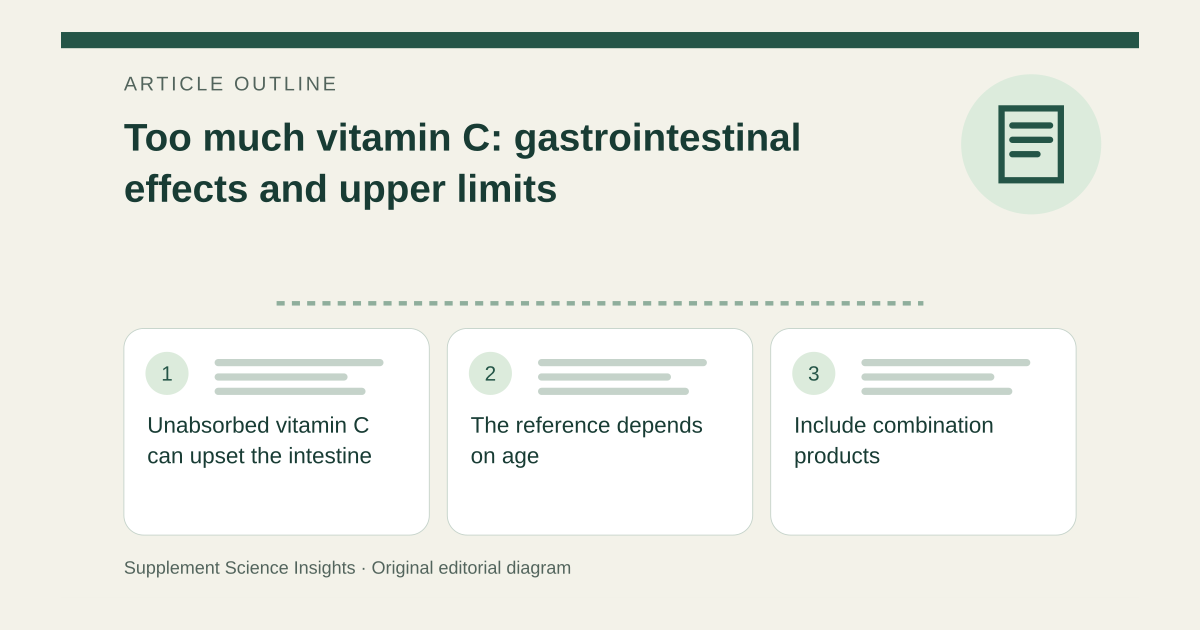
Unabsorbed vitamin C can upset the intestine
High intakes can cause diarrhea, nausea, abdominal cramps and other gastrointestinal symptoms. ODS attributes these common effects to the osmotic action of vitamin C that remains unabsorbed in the intestine. [1]
Excretion of absorbed vitamin C in urine does not prevent those intestinal effects. “Water soluble” describes an important property of the vitamin, not a guarantee that any swallowed amount is well tolerated. [1]
The reference depends on age
The U.S. upper intake limit is 2,000 mg daily for adults. It is 1,800 mg at ages 14–18, 1,200 mg at ages 9–13, 650 mg at ages 4–8 and 400 mg at ages 1–3. These limits include food and supplements. [1]
The limit is not the recommended intake and does not guarantee freedom from symptoms below it. A medically supervised treatment is a separate setting; its regimen should not be copied as a routine nutritional dose. [1]
Include combination products
Imagine someone combines a vitamin C tablet, a multivitamin and an occasional cold preparation. Considering only the tablet gives an incomplete account of intake on days when all three are used.
The useful calculation uses the actual serving of each product and a common time period. It still does not replace assessment of symptoms or establish the contribution of unrecorded foods.
| Detail | Meaning |
|---|---|
| Tablet plus multivitamin | Add actual vitamin C amounts |
| Occasional cold product | Count it on days it is used |
| Upper limit | Compare as a ceiling, not a target |
Certain conditions add concerns beyond stomach upset
ODS highlights potential concerns in people with kidney disorders or pre-existing excess urinary oxalate, and in hereditary hemochromatosis, where high vitamin C intake can worsen iron overload. These are reasons for individualized advice. [1]
Persistent symptoms should not be treated as a sign to increase the amount until the body “adjusts.” Review the need for the supplement, all sources and relevant medical conditions with a clinician. [1]
Sources for this article
- NIH ODS — Vitamin C: Health Professional Fact Sheet
Source consulted: 2026-09-17. This is a reference resource, not a claim that we conducted the studies or tested a product.