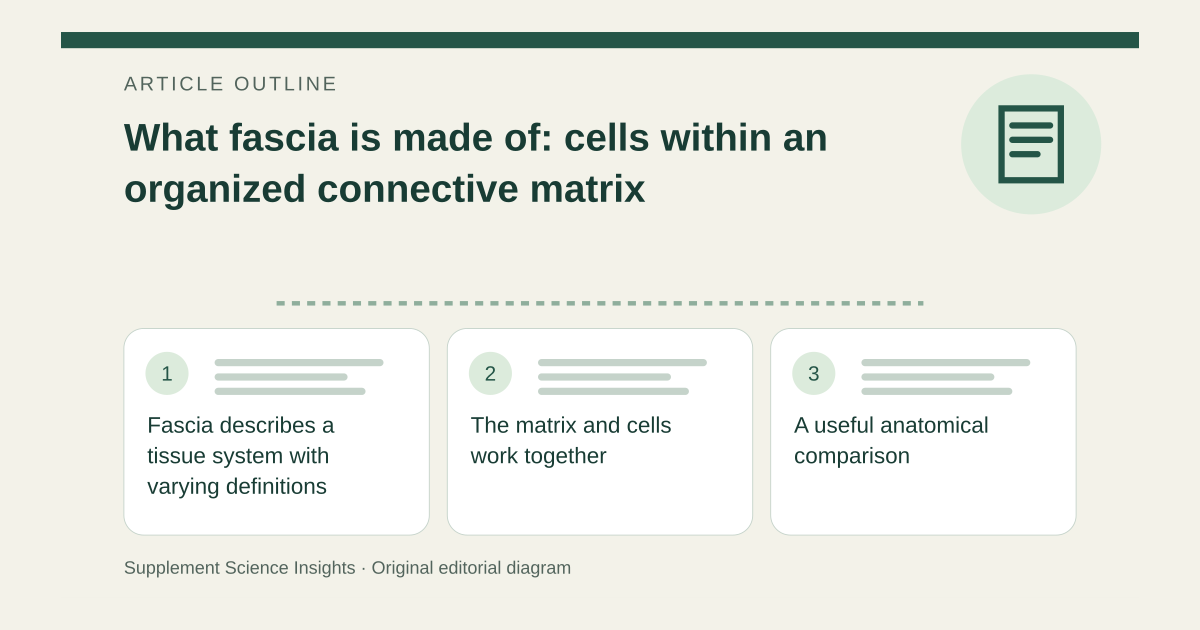
Fascia describes a tissue system with varying definitions
Anatomical definitions differ in how broadly they use fascia. A common definition includes connective tissue beneath the skin that encloses, separates and supports muscles and organs. Superficial loose layers and deeper investing layers are not identical materials, so one fixed composition percentage would be misleading. [1]
The matrix and cells work together
Connective tissues contain locally produced extracellular matrix, including structural proteins such as collagen and other matrix components. Fibroblasts help make and maintain that environment. Fiber organization and the surrounding hydrated material influence mechanics; collagen presence alone does not describe the whole tissue or prove a supplement can repair it. [2]
A useful anatomical comparison
Imagine comparing a loose layer beneath the skin with a dense sheet around a muscle. Both may be discussed within fascial anatomy, but their organization and mechanical role differ. A product claiming to replace fascia with collagen powder skips the distinction between an ingested ingredient and a living, organized tissue. The tissue description is not treatment evidence. [1][2]
| Hypothetical component | Role in the explanation |
|---|---|
| Cells | Produce and maintain matrix |
| Collagen fibers | Structural component |
| Layer-specific organization | Helps explain different tissue behavior |
Sources for this article
- r-fascia-anatomy-032
Source consulted: 2026-09-20. This is a reference resource, not a claim that we conducted the studies or tested a product. - The Extracellular Matrix of Animals - Molecular Biology of the Cell - NCBI Bookshelf
Source consulted: 2026-09-20. This is a reference resource, not a claim that we conducted the studies or tested a product.