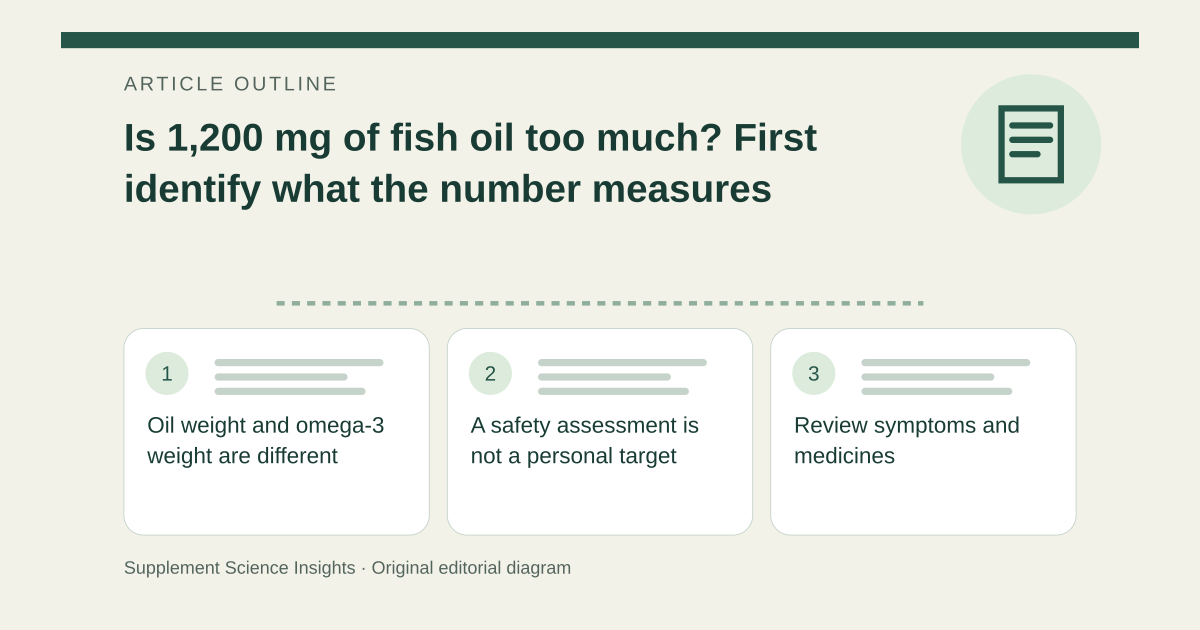
Oil weight and omega-3 weight are different
ODS notes wide variation in supplement composition. The oil can contain EPA, DHA and other fatty acids, so a large front-label oil number does not quantify EPA and DHA by itself. Check whether the numbers refer to one capsule or the full recommended serving. [1]
A safety assessment is not a personal target
ODS reports FDA’s conclusion that supplements providing no more than 5 g daily EPA and DHA are safe when used as recommended. This does not mean everyone should take that amount or that every lower amount suits every person. The intended use, formulation, medicines and medical history still matter. [1]
Review symptoms and medicines
Fish-oil products can cause unpleasant taste, heartburn, nausea or diarrhea. ODS recommends discussing possible medicine interactions, including anticoagulant treatment, with a healthcare professional. Do not change a blood thinner or substitute an ordinary fish-oil capsule for a prescription omega-3 product on the basis of total oil weight. [1]
Add EPA and DHA separately
Imagine a serving declares 1,200 mg fish oil, including 300 mg EPA and 200 mg DHA. The combined EPA/DHA amount is 500 mg. Two such servings would supply 2,400 mg total oil and 1,000 mg EPA/DHA. These invented values demonstrate the calculation, not a recommended dose or a real brand’s formula. [1]
| Measure | One serving |
|---|---|
| Total fish oil | 1,200 mg |
| EPA | 300 mg |
| DHA | 200 mg |
| Combined EPA and DHA | 500 mg |
Sources for this article
- Omega-3 Fatty Acids - Health Professional Fact Sheet
Source consulted: 2026-09-20. This is a reference resource, not a claim that we conducted the studies or tested a product.