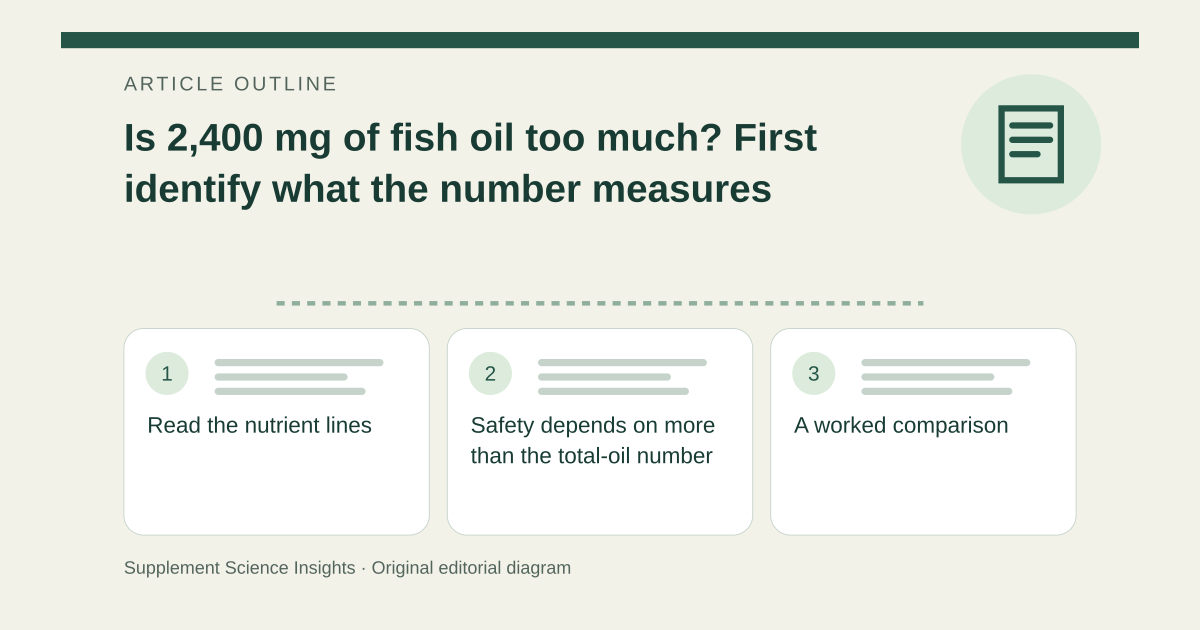
Read the nutrient lines
A front-label total may describe all the oil in a serving rather than EPA and DHA. Find the serving size and the individual omega-3 quantities. A concentrated oil and a less concentrated oil can each supply 2,400 mg total oil while delivering very different EPA/DHA amounts. [1][2]
Safety depends on more than the total-oil number
ODS describes gastrointestinal effects, medication considerations and concerns seen with higher-dose omega-3 regimens in particular populations. That evidence cannot be reduced to a universal verdict based on total oil mass. Review why the product is being taken, other sources and relevant conditions or medicines. [1]
A worked comparison
Imagine 2,400 mg total oil contains 720 mg EPA plus DHA in one product and 1,800 mg in another. Both use the same total-oil headline, but the named omega-3 exposure differs by 1,080 mg. Neither hypothetical label establishes which amount is appropriate for the reader. [1]
| Illustration | Interpretation |
|---|---|
| Product A total oil | 2,400 mg |
| Product A EPA plus DHA | 720 mg |
| Product B EPA plus DHA | 1,800 mg despite the same total oil |
Sources for this article
- Omega-3 Fatty Acids - Health Professional Fact Sheet
Source consulted: 2026-09-20. This is a reference resource, not a claim that we conducted the studies or tested a product. - Questions and Answers on Dietary Supplements | FDA
Source consulted: 2026-09-20. This is a reference resource, not a claim that we conducted the studies or tested a product.