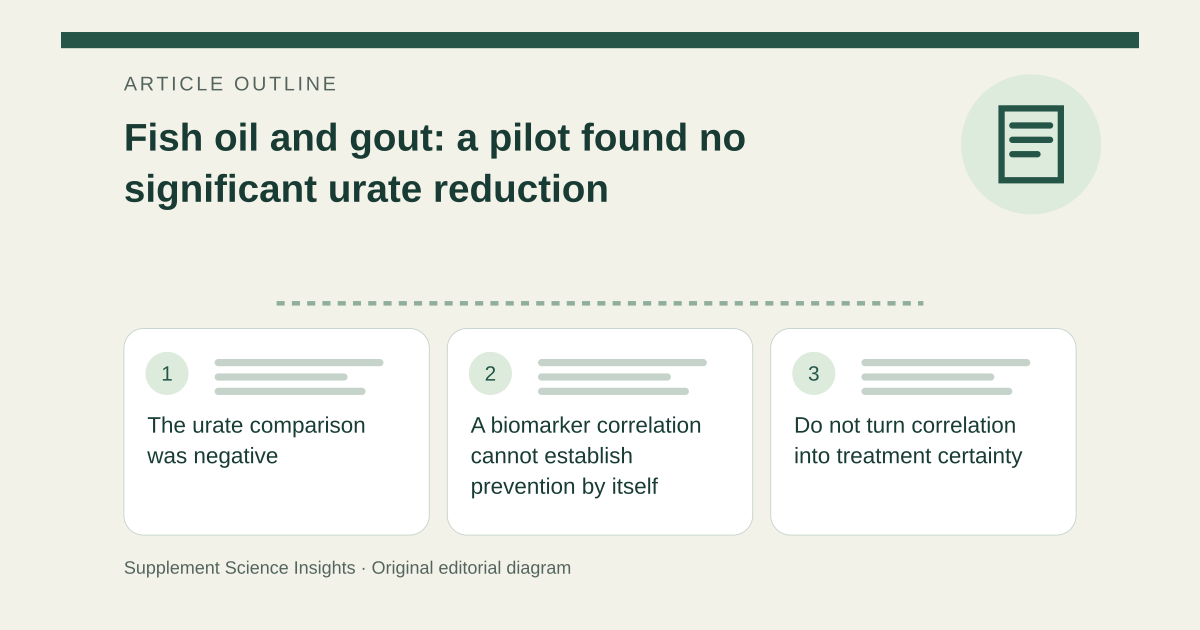
The urate comparison was negative
Forty people with gout were randomized to fish oil or no fish oil for 24 weeks. The trial was open-label, with monthly serum-urate testing and measurements of red-cell EPA and DHA. [1]
The groups did not differ significantly in urate change, weight or body mass index. Higher red-cell omega-3 levels were associated with fewer flares during the later observation period. [1]
A biomarker correlation cannot establish prevention by itself
The trial was small and did not use a blinded placebo comparison. Four fish-oil participants reported gastrointestinal adverse effects considered probably or definitely related to supplementation. [1]
The authors declared no competing interests; funding was not established from the abstract. They called for a larger trial. This study does not establish fish oil as a replacement for urate-lowering therapy, prove prevention of first gout attacks or show that eating fish and taking purified oil have identical effects. [1]
Do not turn correlation into treatment certainty
Imagine participants with higher nutrient levels have fewer attacks. Differences in adherence or other factors can contribute, so a reliable randomized outcome comparison is still needed.
| Detail | Interpretation |
|---|---|
| Serum urate | No significant treatment difference |
| Red-cell omega-3 and flares | Observed correlation |
| Definitive flare prevention | Not established |
Sources for this article
- Effect of omega-three supplementation on serum urate and gout flares in people with gout; a pilot randomized trial - PubMed
Source consulted: 2026-09-19. This is a reference resource, not a claim that we conducted the studies or tested a product.