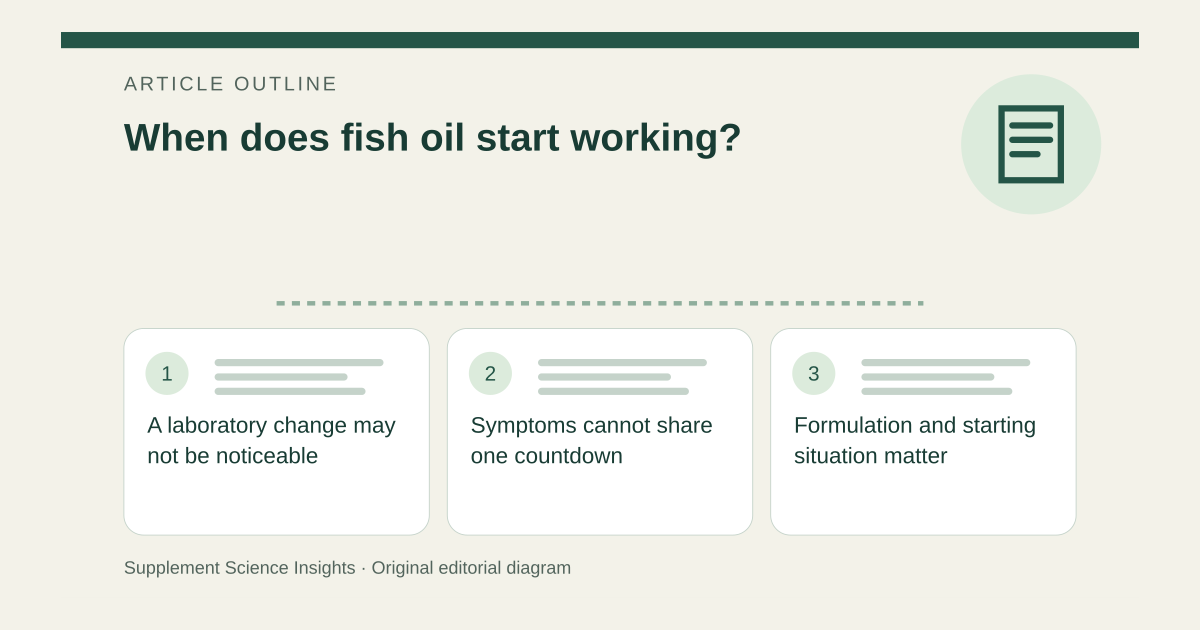
A laboratory change may not be noticeable
Omega-3 intake can alter fatty-acid composition, while specific prescription products can lower triglycerides. These changes may need follow-up testing rather than a sensation. The timing should follow the prescribed product and clinical monitoring plan. [1]
Symptoms cannot share one countdown
NCCIH describes different results for conditions such as dry eye, mood concerns and arthritis. Trial duration is not a promise that everyone improves by the same day, and evidence for one preparation does not set the clock for another. [2]
Formulation and starting situation matter
Total fish-oil weight is not the same as EPA plus DHA. Diet, the reason for use, adherence and the actual formula all affect interpretation. Increasing the dose because nothing is felt can add adverse effects without establishing benefit. [1][3]
Agree on a review point and outcome
Imagine someone wants lower triglycerides while another wants less dry-eye discomfort. Their review measures differ, and one may need prescribed treatment. Record the goal and discuss an appropriate follow-up rather than continuing indefinitely on a vague wellness promise. [1][2]
| Claim or observation | Interpretation |
|---|---|
| Blood-fat goal | Use appropriate testing |
| Symptom goal | Measure the actual symptom |
| Trial lasted weeks | Not a personal guarantee |
| No noticeable effect | Do not automatically escalate |
Sources for this article
- Omega-3 Fatty Acids - Health Professional Fact Sheet
Source consulted: 2026-09-21. This is a reference resource, not a claim that we conducted the studies or tested a product. - Omega-3 Supplements: What You Need To Know | NCCIH
Source consulted: 2026-09-21. This is a reference resource, not a claim that we conducted the studies or tested a product. - Dietary Supplements: What You Need to Know
Source consulted: 2026-09-21. This is a reference resource, not a claim that we conducted the studies or tested a product.