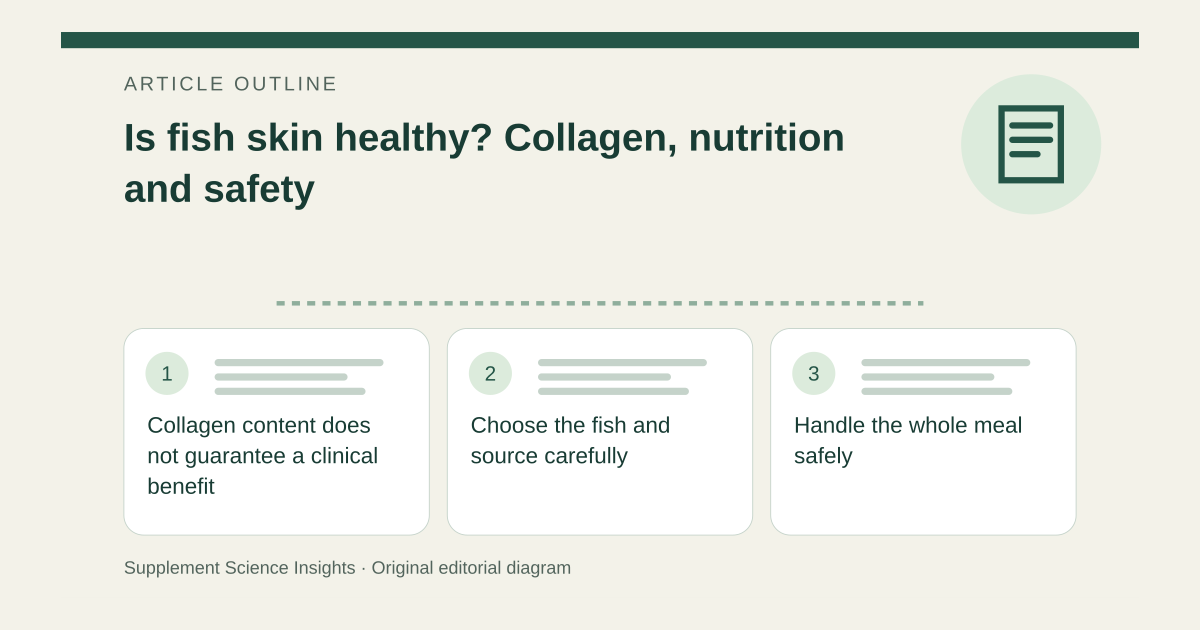
Collagen content does not guarantee a clinical benefit
Skin contains collagen, a structural protein. That does not mean a serving delivers collagen intact to your face or joints. Dietary protein contributes amino acids for the body’s own synthesis, and the amount in a meal depends on species and preparation. [1][2]
Choose the fish and source carefully
FDA fish guidance emphasizes choosing fish with appropriate mercury levels, particularly during pregnancy and childhood. Locally caught fish need local advisory checks. Do not assume keeping or removing skin makes a fish from an unsafe source acceptable; a preparation choice is not a universal contaminant-removal method. [3]
Handle the whole meal safely
FDA recommends cooking most seafood to an internal temperature of 145°F and avoiding unsafe storage. Imagine crisp skin served over properly cooked fish: browning the surface alone does not verify the temperature of the flesh. Fish allergy and any species-specific restrictions still apply. [4]
| Detail | Meaning |
|---|---|
| Skin texture | Not a collagen dose |
| Source advisory | Check before eating |
| Crisp surface | Does not verify internal temperature |
Sources for this article
- Science of Cooking: Ask the Inquisitive Cooks!
Source consulted: 2026-09-21. This is a reference resource, not a claim that we conducted the studies or tested a product. - 18 Foods With Collagen Boosting Benefits
Source consulted: 2026-09-21. This is a reference resource, not a claim that we conducted the studies or tested a product. - Advice about Eating Fish | FDA
Source consulted: 2026-09-21. This is a reference resource, not a claim that we conducted the studies or tested a product. - Selecting and Serving Fresh and Frozen Seafood Safely | FDA
Source consulted: 2026-09-21. This is a reference resource, not a claim that we conducted the studies or tested a product.