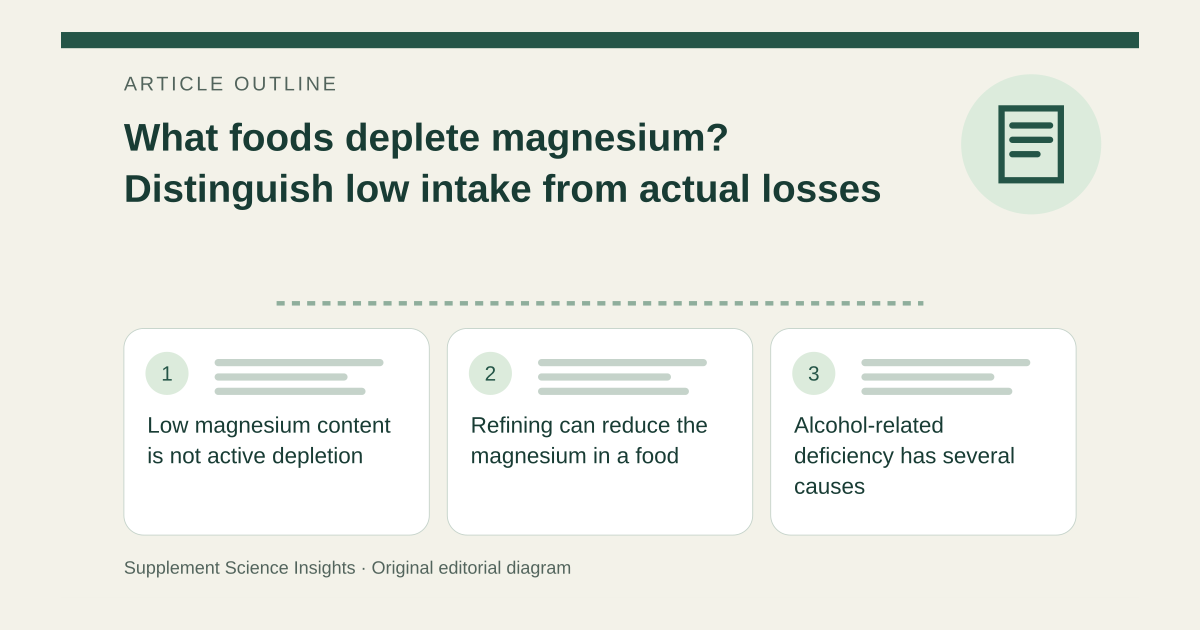
Low magnesium content is not active depletion
A diet dominated by foods with little magnesium may fail to meet needs without any one food directly stripping the mineral from the body. Look at the overall pattern rather than assigning a depletion effect to every low-magnesium item. [1][2]
Refining can reduce the magnesium in a food
NIH explains that processing grains can remove magnesium-rich parts. This changes how much the food supplies; it does not mean the refined food actively removes stored magnesium after it is eaten. Whole grains are among the foods that can contribute to intake. [1]
Alcohol-related deficiency has several causes
People with alcohol dependence can have inadequate intake and gastrointestinal or kidney-related magnesium losses, among other contributing factors. That is a clinical pattern, not a validated formula for how many milligrams are lost with one beverage. Persistent heavy use or symptoms deserves appropriate care. [1]
Consider actual causes of impaired balance
Chronic diarrhea, malabsorption, diabetes-related losses and some medicines can affect magnesium status. Food avoidance alone will not correct an untreated cause. A clinician can decide whether testing and replacement are needed. [1]
Build intake instead of an unsupported blacklist
Imagine someone removes legumes and whole grains after reading a broad mineral-depletion claim. Those foods can contribute magnesium, so the change may reduce intake. A varied pattern with nuts, seeds, legumes, leafy vegetables and whole grains is a more evidence-based starting point than excluding nutritious categories without a specific reason. [1][2]
| Situation | Main issue |
|---|---|
| Low-magnesium food | Limited contribution to intake |
| Refined grain | Less magnesium supplied after processing |
| Persistent diarrhea | Possible ongoing loss or absorption problem |
| Alcohol dependence | Several possible nutritional and loss mechanisms |
Sources for this article
- Magnesium - Health Professional Fact Sheet
Source consulted: 2026-09-21. This is a reference resource, not a claim that we conducted the studies or tested a product. - Magnesium - Consumer
Source consulted: 2026-09-21. This is a reference resource, not a claim that we conducted the studies or tested a product.