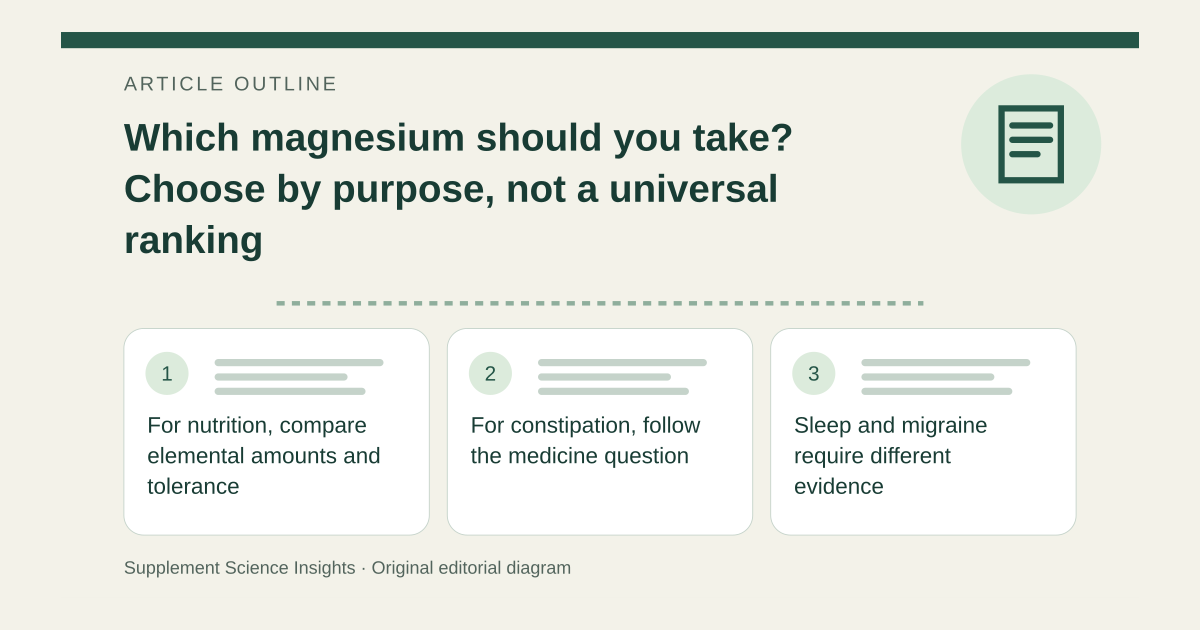
For nutrition, compare elemental amounts and tolerance
ODS reports that aspartate, citrate, lactate and chloride tend to be more bioavailable than oxide and sulfate. Absorption alone does not identify the best clinical outcome for every person. Read the elemental magnesium per serving, consider food intake and choose a tolerable preparation when a supplement is actually needed. [1]
For constipation, follow the medicine question
The AGA/ACG guideline conditionally suggests magnesium oxide for chronic idiopathic constipation, with very low certainty of evidence and a warning to avoid it in renal insufficiency. This is a bowel-treatment decision, not a reason to rank it above every nutritional form or use any magnesium laxative indefinitely. [2]
Sleep and migraine require different evidence
NCCIH describes limited and inconsistent magnesium evidence for insomnia; it does not establish a best salt or bedtime interval. ODS discusses possible migraine-prevention benefit, often with amounts requiring clinical supervision. A migraine prevention finding is not a promise to relieve any current headache. [3][1]
Two symptoms do not create one best formulation
If sleep difficulty and constipation occur together, assess both rather than assuming a laxative response proves a sleep benefit. Likewise, fatigue or cramps do not by themselves diagnose low magnesium. Persistent symptoms may need a different explanation and treatment. [1][3][2]
Review the amount and context before the brand
The U.S. adult upper limit of 350 mg applies to supplemental and medicinal magnesium, not naturally occurring food magnesium. Kidney impairment and interacting medicines change the decision. Imagine choosing between two equal elemental amounts: tolerability and a defined purpose matter more than an unsupported universal best claim. [1]
| Purpose | First distinction |
|---|---|
| Nutritional intake | Elemental amount and dietary gap |
| Constipation | Specific medicine and renal context |
| Insomnia | Limited evidence, no established best form |
Sources for this article
- Magnesium - Health Professional Fact Sheet
Source consulted: 2026-09-21. This is a reference resource, not a claim that we conducted the studies or tested a product. - American Gastroenterological Association-American College of Gastroenterology Clinical Practice Guideline: Pharmacological Management of Chronic Idiopathic Constipation - PMC
Source consulted: 2026-09-21. This is a reference resource, not a claim that we conducted the studies or tested a product. - Sleep Disorders and Complementary Health Approaches: Usefulness and Safety | NCCIH
Source consulted: 2026-09-21. This is a reference resource, not a claim that we conducted the studies or tested a product.