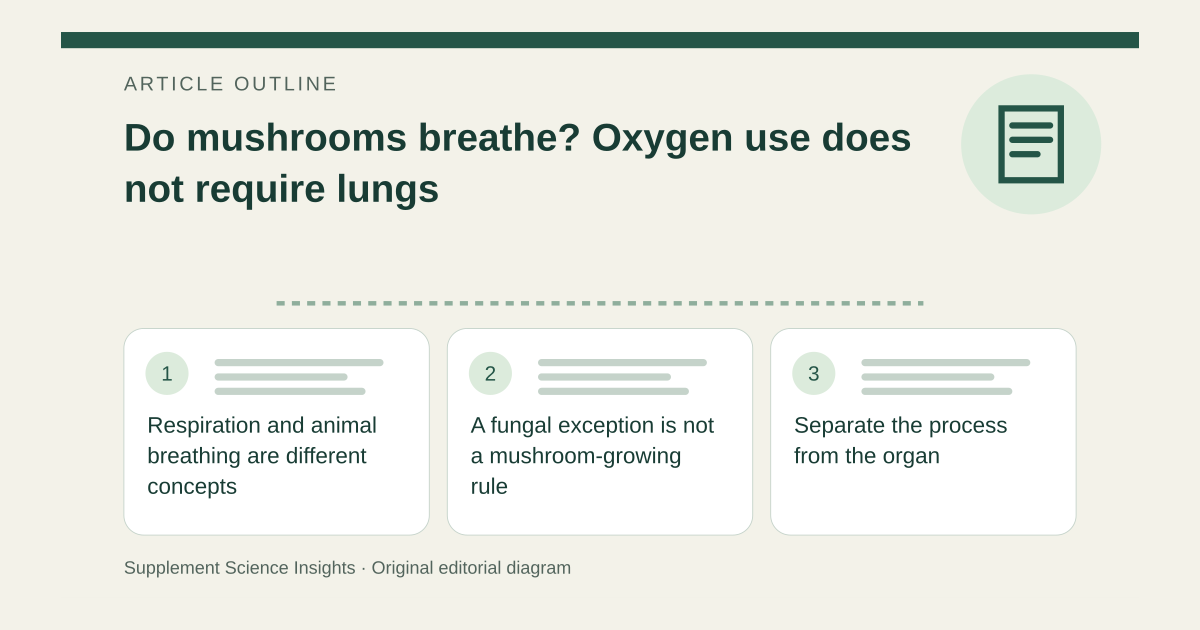
Respiration and animal breathing are different concepts
Cellular respiration concerns chemical processes that release usable energy. Breathing, in the everyday animal sense, concerns moving air through specialized organs. A fungus can carry out oxygen-dependent metabolism without lungs or a chest that expands. [1]
OpenStax describes most fungi as obligate aerobes, while some fungal groups have different oxygen requirements. Yeasts provide an example of organisms able to shift between oxygen-supported metabolism and fermentation. [1]
A fungal exception is not a mushroom-growing rule
It would be incorrect to infer that a typical cultivated mushroom needs no oxygen because a yeast can ferment. The relevant organism, growth stage and environmental conditions must be specified. [1]
This general biology also does not quantify carbon dioxide production in an individual growing setup or provide a ventilation specification. Such practical calculations require measurements and species-specific production information rather than a broad statement that fungi respire. [1]
Separate the process from the organ
Imagine a question asks whether a mushroom has lungs. Answering no does not imply that its cells cannot use oxygen; the question about anatomical organs differs from the question about metabolism.
| Detail | Interpretation |
|---|---|
| Lungs | Animal respiratory organs |
| Cellular respiration | Metabolic process |
| Fungal oxygen needs | Vary among groups |
Sources for this article
- 24.1 Characteristics of Fungi - Biology 2e | OpenStax
Source consulted: 2026-09-19. This is a reference resource, not a claim that we conducted the studies or tested a product.