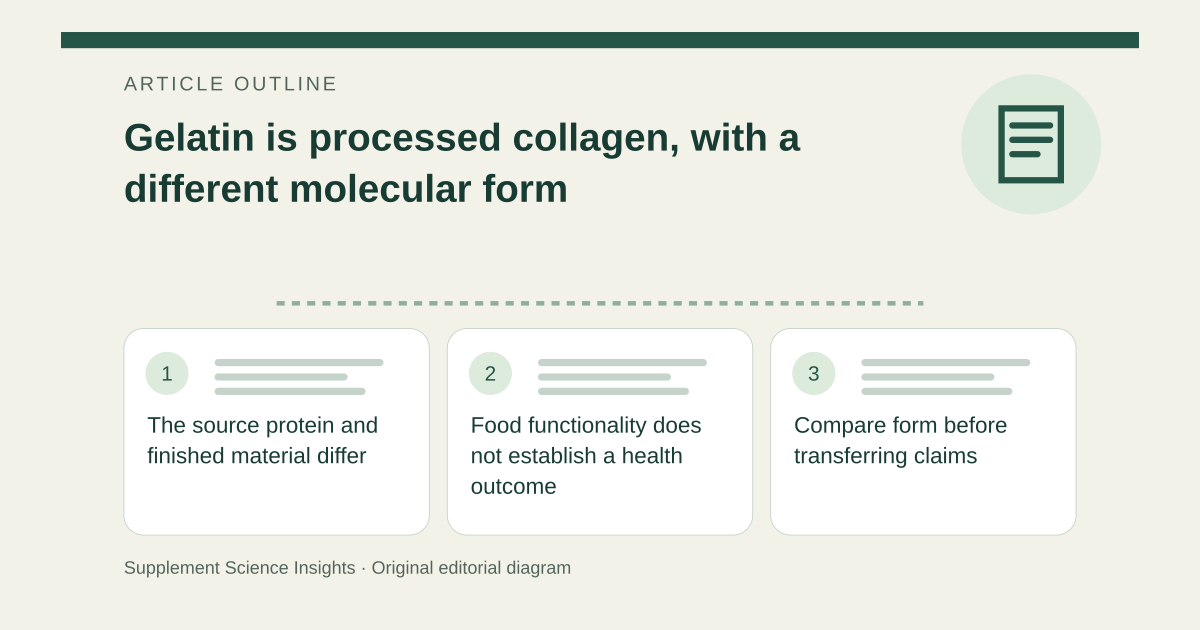
The source protein and finished material differ
The review distinguishes native collagen from gelatin produced through denaturing treatment. Processing changes the organized structure, so the original tissue’s collagen identity does not fully describe the finished gelatin. [1]
Further hydrolysis breaks chains into smaller fragments. That additional step helps distinguish a hydrolysate from gelatin rather than treating every collagen-derived ingredient as one molecular form. [1]
Food functionality does not establish a health outcome
Gelatin’s usefulness as a food ingredient is a different question from whether a specific oral preparation improves joints or skin. Those outcomes require appropriate clinical evidence. [1]
The cited composition review was written by employees of a collagen-ingredient manufacturer. This page uses its manufacturing distinctions and does not adopt promotional claims of therapeutic benefit or absence of allergy risk. [1]
Compare form before transferring claims
Imagine one study concerns native collagen while a recipe uses gelatin. A shared animal-protein origin does not make the preparation or purpose equivalent.
| Detail | Interpretation |
|---|---|
| Native collagen | Organized triple helix |
| Gelatin | Denatured collagen material |
| Hydrolysate | Further fragmented mixture |
Sources for this article
- Collagen Supplementation for Joint Health: The Link between Composition and Scientific Knowledge - PMC
Source consulted: 2026-09-17. This is a reference resource, not a claim that we conducted the studies or tested a product.