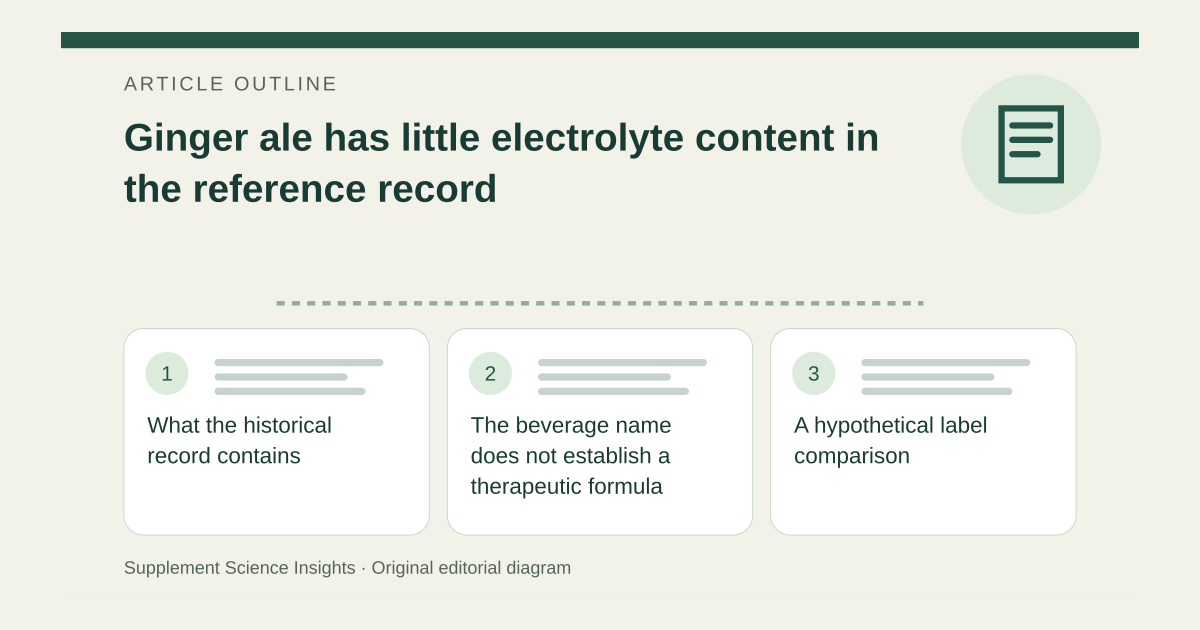
What the historical record contains
USDA SR Legacy lists regular carbonated ginger ale at 7 mg sodium, 1 mg potassium and 8.9 g total sugars per 100 g. A hypothetical 300 g portion supplies 21 mg sodium, 3 mg potassium and 26.7 g sugars. [1]
The beverage name does not establish a therapeutic formula
A nutrient being present is different from an adequate amount for a particular rehydration purpose. The food-composition record does not test treatment of dehydration, vomiting or diarrhea. A diet ginger ale or a different formulation also needs its own label rather than these regular-soda values. [2]
A hypothetical label comparison
Imagine a clinician recommends a particular rehydration preparation with specified instructions. A ginger-flavored soda is not automatically an interchangeable substitute because both are drinks. Compare the exact sodium, carbohydrate and other relevant ingredients, and follow the clinical instructions. This page provides composition, not a home rehydration recipe. [2]
| Regular ginger ale,300 g | Reference amount |
|---|---|
| Sodium | 21 mg |
| Potassium | 3 mg |
| Total sugars | 26.7 g |
Sources for this article
- USDA FoodData Central — SR Legacy April 2018 composition and portion tables
Source consulted: 2026-09-20. This is a reference resource, not a claim that we conducted the studies or tested a product. - How to Understand and Use the Nutrition Facts Label | FDA
Source consulted: 2026-09-20. This is a reference resource, not a claim that we conducted the studies or tested a product.