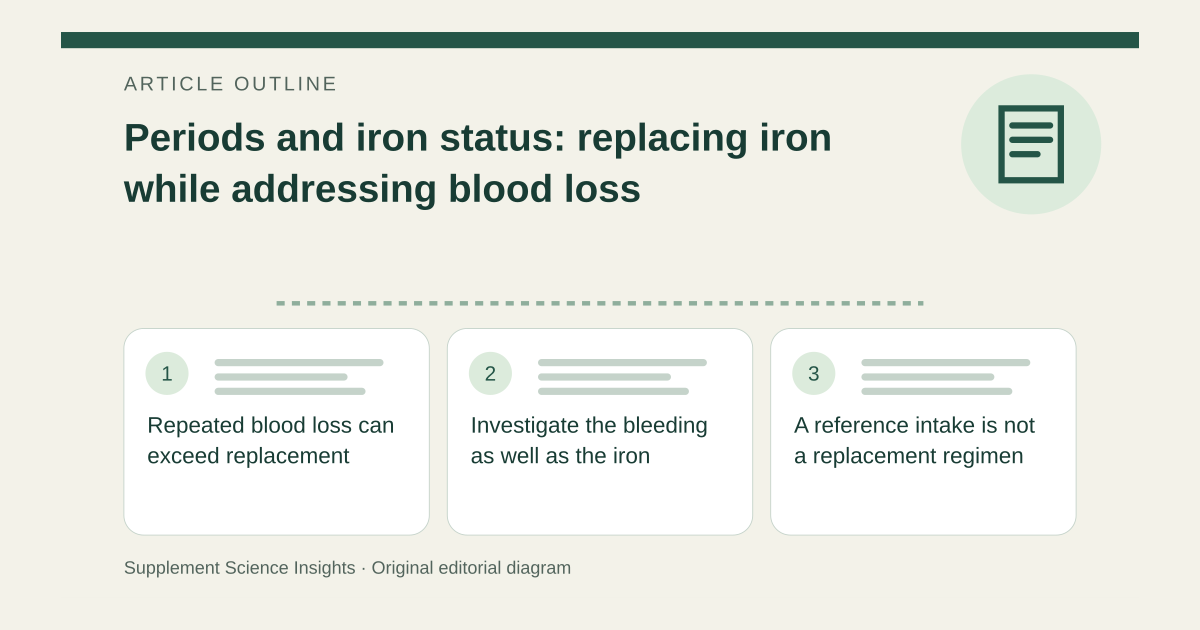
Repeated blood loss can exceed replacement
Menstrual bleeding removes iron, and unusually heavy bleeding increases the risk of deficiency. NIH ODS identifies heavy menstrual bleeding as an important risk factor. The issue is the balance between ongoing losses, intake and absorption over time. [1]
Not every menstruating person needs an iron supplement. The amount of bleeding, symptoms, diet and test results help determine whether replacement is needed and whether there is anemia as well as depleted stores. [1]
Investigate the bleeding as well as the iron
The NHS emphasizes that heavy periods can be treated and that the cause of iron-deficiency anemia should be identified. A supplement may replace missing iron while leaving the source of continuing loss unresolved. [2]
Tell the clinician how bleeding affects daily life and whether there are symptoms such as unusual fatigue, breathlessness or palpitations. Those symptoms can occur in iron-deficiency anemia but are not specific enough to make the diagnosis by themselves. [2]
A reference intake is not a replacement regimen
The U.S. iron RDA for women aged 19–50 is 18 mg daily, compared with 8 mg for women aged 51 and older. These population reference categories do not determine the treatment dose for someone with heavy bleeding or diagnosed deficiency. [1][2]
Foods can contribute iron, but the need for medication and monitoring depends on the assessment. Do not convert an estimate of menstrual loss into a self-prescribed supplement dose or assume a few iron-rich meals will rapidly rebuild depleted stores. [1][2]
An improving count can coexist with an unresolved cause
Imagine blood counts improve during prescribed iron treatment while heavy periods continue. The response shows that replacement is helping, but the ongoing loss remains relevant to recurrence and duration of treatment. A follow-up should retain both observations rather than declaring the problem solved from one improved result.
| Record | Why it matters |
|---|---|
| Low stores or anemia | Assess and replace the deficit when indicated |
| Continuing heavy periods | Investigate and manage the source of loss |
| Improved repeat result | Progress, not proof the cause has resolved |
Get a plan for persistent symptoms or bleeding
Discuss persistent heavy bleeding and symptoms with a clinician rather than repeatedly restarting iron without investigation. If treatment causes constipation or other adverse effects, report them so the regimen can be reviewed instead of silently missing doses. [2][3]
This article does not diagnose the cause of bleeding or prescribe iron for everyone who menstruates. It separates replacing a deficit from managing why it occurred. [2][3]
Sources for this article
- NIH ODS — Iron: Health Professional Fact Sheet
Source consulted: 2026-09-17. This is a reference resource, not a claim that we conducted the studies or tested a product. - NHS — Iron deficiency anaemia
Source consulted: 2026-09-17. This is a reference resource, not a claim that we conducted the studies or tested a product. - MedlinePlus — Taking iron supplements
Source consulted: 2026-09-17. This is a reference resource, not a claim that we conducted the studies or tested a product.