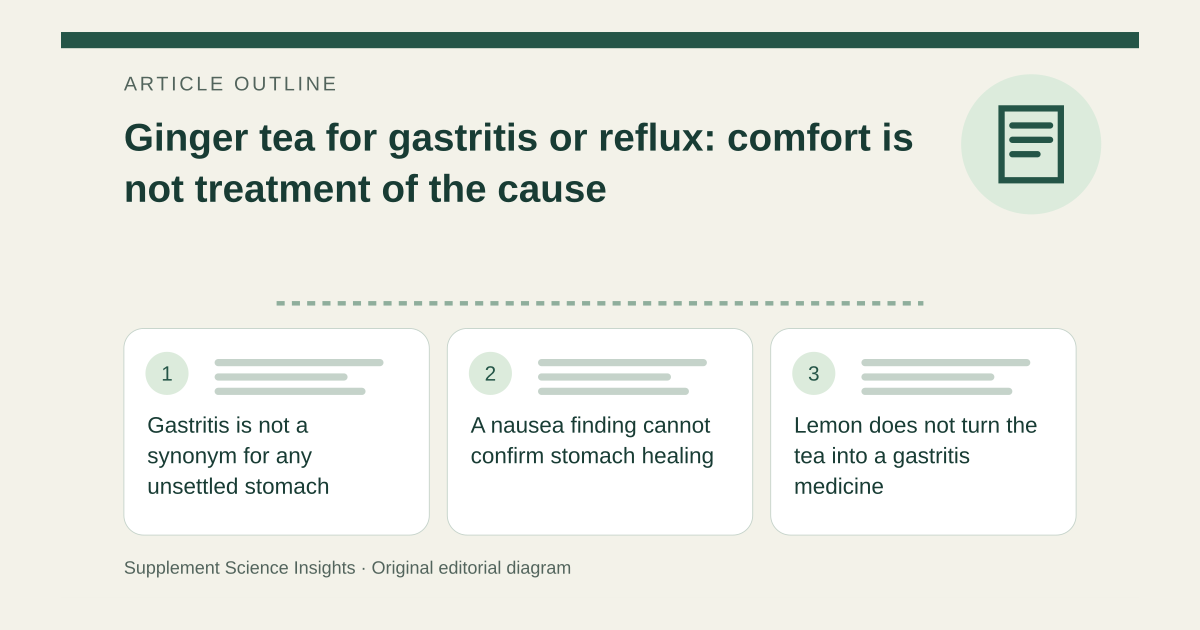
Gastritis is not a synonym for any unsettled stomach
NIDDK describes treatment according to the cause, including H. pylori infection, medication-related injury and autoimmune disease. Diet is not the main cause of most gastritis. Ginger does not replace an indicated infection regimen or the investigation of persistent symptoms. [1][2]
A nausea finding cannot confirm stomach healing
NCCIH’s ginger findings differ by nausea context and mostly involve supplements. Less nausea after a drink does not establish eradication of H. pylori or repair of injured tissue. Complete prescribed treatment and the recommended follow-up rather than using comfort as the sole measure of success. [3][1]
Lemon does not turn the tea into a gastritis medicine
Adding lemon changes the drink, not the evidence for treating its underlying cause. If the whole drink triggers burning or discomfort, avoid the trigger. Ginger’s recognized adverse effects include heartburn, abdominal discomfort and mouth or throat irritation. [3][4]
There is no best tea time that treats reflux
NHS recommends avoiding personal food or drink triggers, smaller meals and avoiding eating close to bedtime. It does not establish a ginger-tea schedule as reflux therapy. Do not move a poorly tolerated drink to bedtime on the assumption that nighttime use heals the stomach. [4]
Escalate symptoms rather than repeatedly changing the brew
Sudden or severe abdominal pain, vomiting blood, black sticky stools or collapse require urgent assessment. Imagine symptoms ease briefly with warm liquid but keep returning: the improvement does not establish a diagnosis or remove the need for care. [5][1]
| Observation | Meaning |
|---|---|
| Less nausea | A symptom change, not proven healing |
| Burning after the drink | Review and avoid a possible trigger |
| Persistent or severe symptoms | Assess the cause and urgency |
Sources for this article
- Treatment of Gastritis & Gastropathy - NIDDK
Source consulted: 2026-09-21. This is a reference resource, not a claim that we conducted the studies or tested a product. - Eating, Diet, & Nutrition for Gastritis & Gastropathy - NIDDK
Source consulted: 2026-09-21. This is a reference resource, not a claim that we conducted the studies or tested a product. - Ginger: Usefulness and Safety | NCCIH
Source consulted: 2026-09-21. This is a reference resource, not a claim that we conducted the studies or tested a product. - Heartburn and acid reflux - NHS
Source consulted: 2026-09-21. This is a reference resource, not a claim that we conducted the studies or tested a product. - Stomach ache - NHS
Source consulted: 2026-09-21. This is a reference resource, not a claim that we conducted the studies or tested a product.