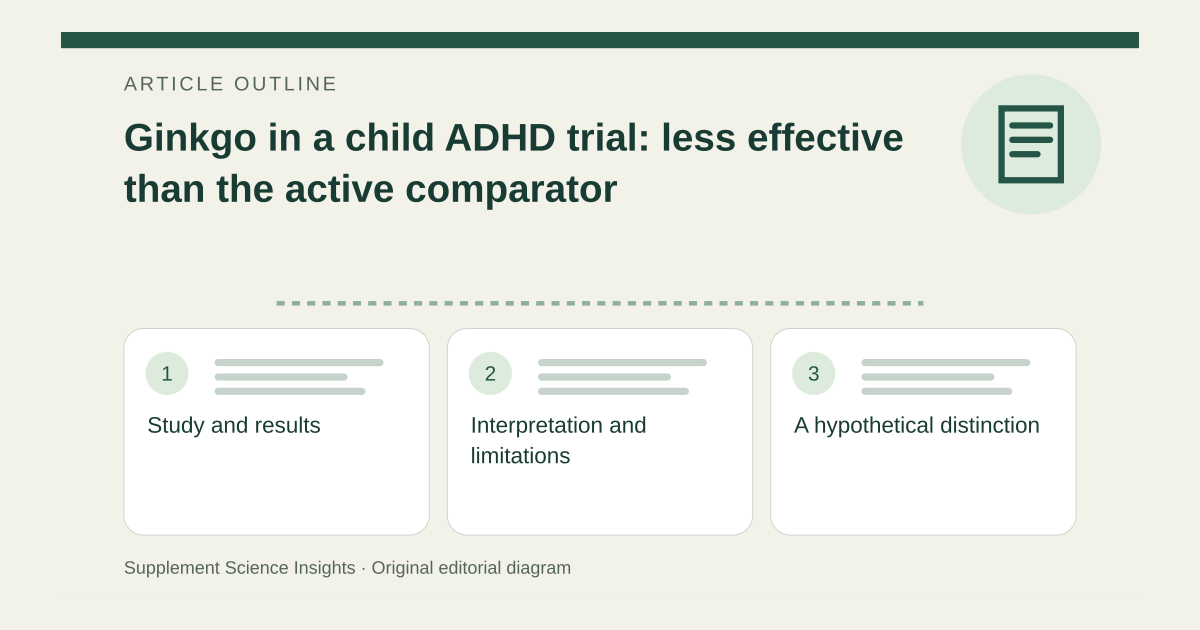
Study and results
Fifty children and adolescents entered a randomized, double-blind comparison of a specified ginkgo product and methylphenidate. Doses varied by weight, and ratings were collected at baseline and during treatment. [1]
Parent and teacher scores improved more with methylphenidate. Decreased appetite, headache and insomnia were reported more frequently with methylphenidate; other reported adverse-effect frequencies did not significantly differ. [1]
Interpretation and limitations
This was a small, short active-comparator study, not a general pediatric safety assessment. It does not establish a home dose or a substitute for ADHD care. Funding and conflicts were not established from the retrieved abstract. [1]
A hypothetical distinction
Imagine one treatment has fewer reports of a particular side effect but also much less symptom benefit. Both findings belong in the comparison.
| Detail | Interpretation |
|---|---|
| Symptom ratings | Favored comparator |
| Selected adverse effects | Separate outcome |
| Long-term child safety | Not established |
Sources for this article
- Ginkgo biloba for attention-deficit/hyperactivity disorder in children and adolescents: a double blind, randomized controlled trial - PubMed
Source consulted: 2026-09-19. This is a reference resource, not a claim that we conducted the studies or tested a product.