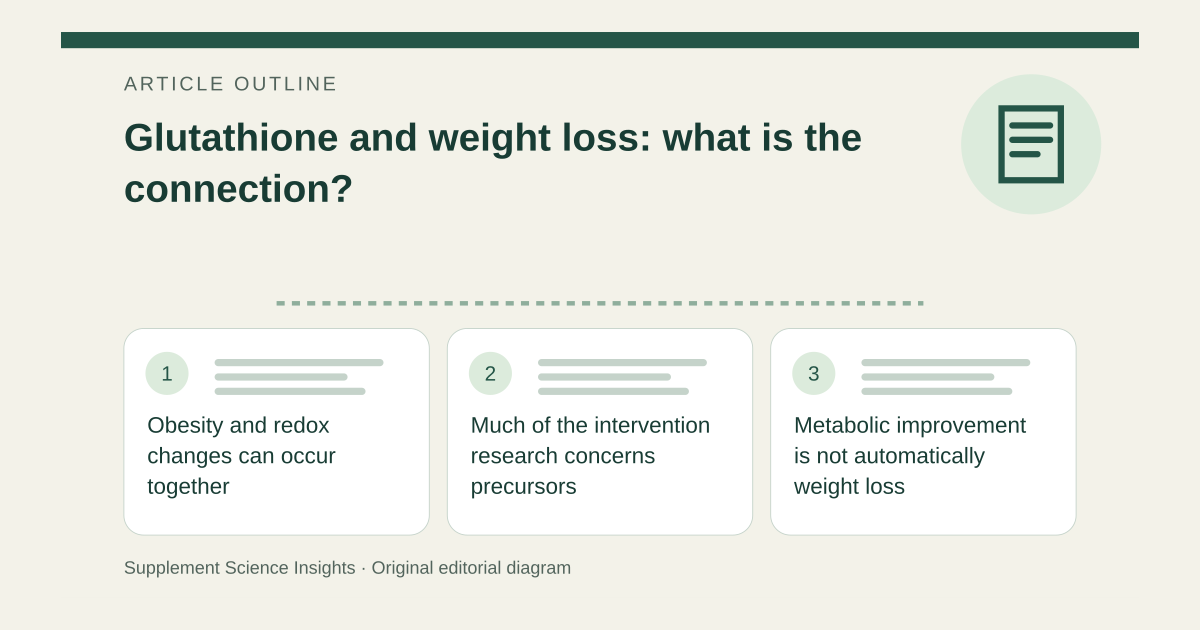
Obesity and redox changes can occur together
A 2026 review describes links between excess adiposity, inflammation and disturbed glutathione-related redox balance. Such relationships do not establish which changes are causes, consequences or compensatory responses in an individual. [1]
Much of the intervention research concerns precursors
The review focuses on N-acetylcysteine and glycine, which support glutathione-related pathways, rather than validating every finished glutathione product. It describes evidence dominated by animal models and small human trials and calls for larger studies to establish benefit, safety and doses. [1]
Metabolic improvement is not automatically weight loss
An insulin-resistance or liver-fat marker can change without demonstrating a sustained reduction in body weight. Neither a proposed mechanism nor a rise in glutathione concentration supplies a validated weight-loss regimen. [1][2]
Do not escalate to injections for an unproven goal
Imagine an IV service advertises a glutathione fat-burning package. Ask for reliable evidence of meaningful weight outcomes for that exact intervention. Current FDA and CDC warnings also show that compounded injectable product quality creates risks that an antioxidant label does not remove. [3][4]
| Finding | What it does not prove |
|---|---|
| Redox disturbance in obesity | Supplement-induced fat loss |
| Precursor research | Efficacy of every glutathione product |
| Better biomarker | Sustained weight reduction |
| IV delivery | Superior or safe weight treatment |
Sources for this article
- Glutathione precursors: a new opportunity for dietary interventions in obesity and metabolic health?
Source consulted: 2026-09-21. This is a reference resource, not a claim that we conducted the studies or tested a product. - Frontiers | Glutathione: Pharmacological aspects and implications for clinical use in non-alcoholic fatty liver disease
Source consulted: 2026-09-21. This is a reference resource, not a claim that we conducted the studies or tested a product. - FDA reminds compounders not to use dietary supplement grade glutathione for injectables | FDA
Source consulted: 2026-09-21. This is a reference resource, not a claim that we conducted the studies or tested a product. - Adverse Events Linked to Injectable Glutathione Compounded with Dietary Supplement Grade Ingredient: Current Situation | HAIs | CDC
Source consulted: 2026-09-21. This is a reference resource, not a claim that we conducted the studies or tested a product.