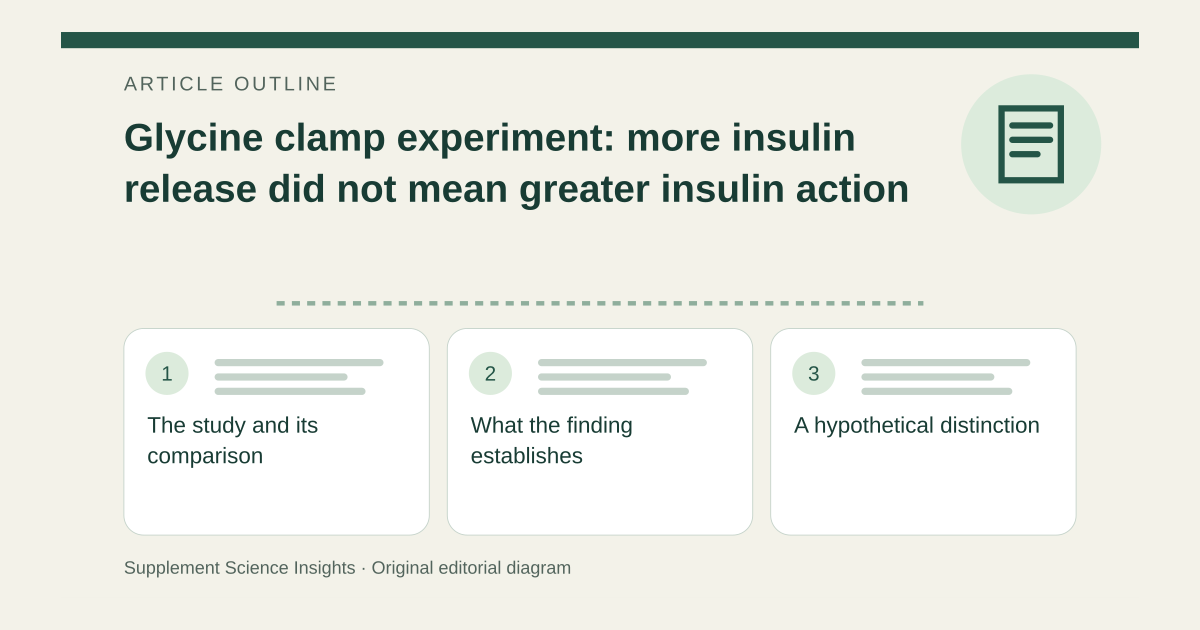
The study and its comparison
Twelve healthy, non-obese first-degree relatives of people with type 2 diabetes were randomized to a single 5-gram glycine dose or placebo. A glucose-and-insulin clamp assessed their responses. [1]
Early, late and total insulin responses increased more with glycine. The measured change in insulin action did not differ significantly between groups. An increased secretion response therefore did not establish improved insulin sensitivity. [1]
What the finding establishes
This was an acute experiment in people without diabetes, not a trial of long-term glucose control. It cannot establish a diabetes treatment dose or predict daily glucose responses to unrelated meals. Funding and conflicts were not established from the abstract. [1]
A hypothetical distinction
Imagine the pancreas releases more insulin while tissue responsiveness stays unchanged. Reporting only more insulin obscures the second result.
| Detail | Interpretation |
|---|---|
| Measured outcome | Keep the endpoint specific |
| Study preparation | Not every retail product |
| Remaining uncertainty | Not resolved by a mechanism |
Sources for this article
- Effect of glycine on insulin secretion and action in healthy first-degree relatives of type 2 diabetes mellitus patients - PubMed
Source consulted: 2026-09-19. This is a reference resource, not a claim that we conducted the studies or tested a product.