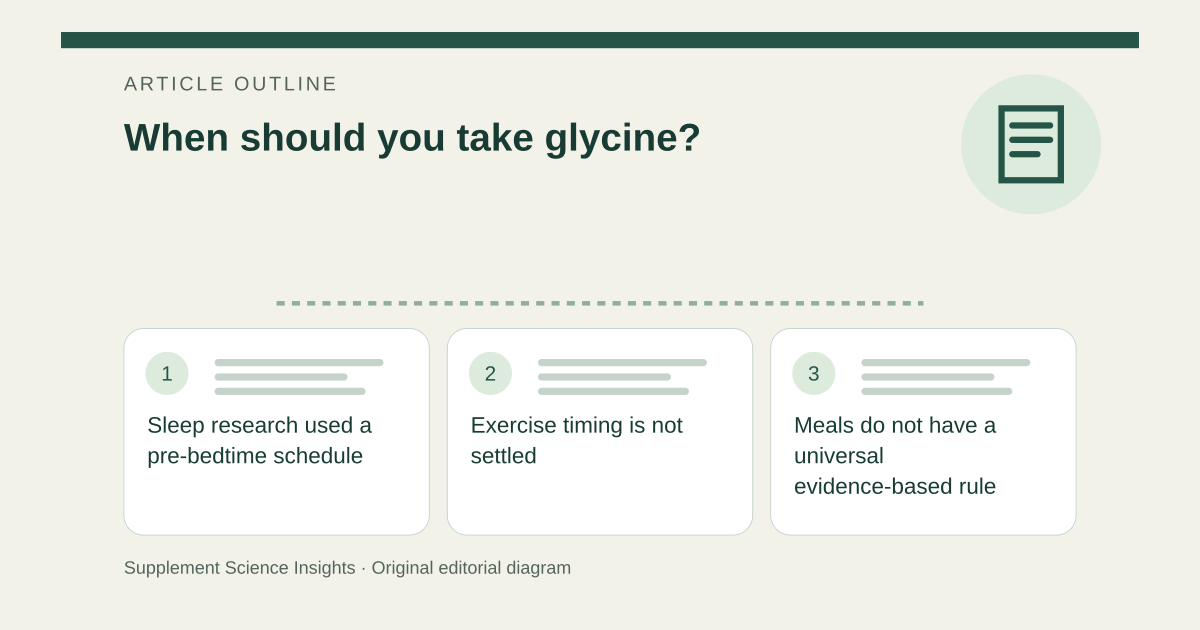
Sleep research used a pre-bedtime schedule
The human systematic review describes small studies using 3 grams around 30 to 60 minutes before bedtime for a few nights. Reported improvements were limited by small samples and risk of bias. This does not establish a guaranteed effect on the first night or long-term insomnia treatment. [1]
Exercise timing is not settled
A sports review found insufficient rigorous human evidence to establish glycine recommendations for performance and recovery. A role in collagen or creatine synthesis does not identify a proven pre-workout or post-workout window. [2]
Meals do not have a universal evidence-based rule
The reviewed material does not establish that everyone should take glycine fasting, with breakfast or after dinner. Follow the actual product directions and any individualized clinical instructions. Blends require review of the other ingredients as well. [1][3]
Keep the goal and observation clear
Imagine a person takes glycine for sleep and adds extra servings around workouts. That changes both dose and purpose without establishing additional benefit. Keep a clear record of the intended outcome, timing and any symptoms rather than escalating across several routines. [1][2]
| Purpose | Evidence limit |
|---|---|
| Sleep | Small short pre-bedtime studies |
| Exercise | No established optimal window |
| Meals | No universal fasting rule |
| Multiple goals | Do not automatically add doses |
Sources for this article
- The effect of glycine administration on the characteristics of physiological systems in human adults: A systematic review - PMC
Source consulted: 2026-09-21. This is a reference resource, not a claim that we conducted the studies or tested a product. - An Update of the Promise of Glycine Supplementation for Enhancing Physical Performance and Recovery - PMC
Source consulted: 2026-09-21. This is a reference resource, not a claim that we conducted the studies or tested a product. - Dietary Supplements: What You Need to Know
Source consulted: 2026-09-21. This is a reference resource, not a claim that we conducted the studies or tested a product.