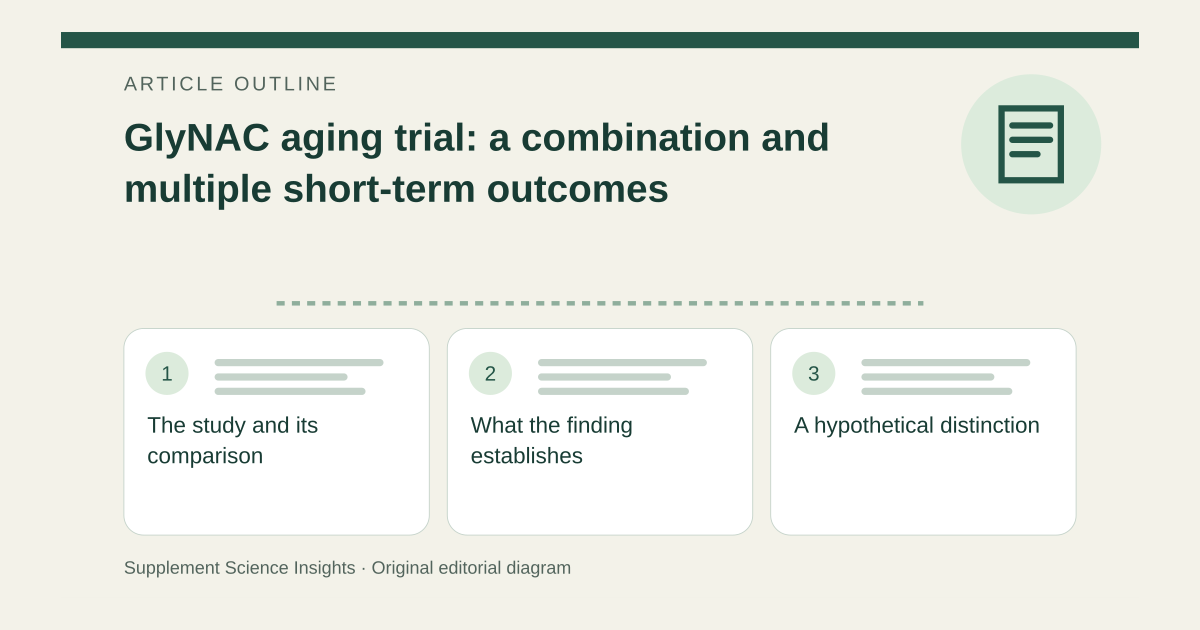
The study and its comparison
Twenty-four older adults were randomized to glycine plus N-acetylcysteine or an alanine placebo for 16 weeks. Twelve younger adults formed a separate reference group and received the combination for two weeks. [1]
The investigators reported improvements in glutathione status, oxidative stress and several metabolic or functional measures in older participants. The intervention combined two ingredients; there was no glycine-only arm. [1]
What the finding establishes
Twelve older participants per randomized group and numerous outcomes leave uncertainty about replication and broader clinical benefit. Lifespan was not an endpoint. NIH aging-research funding and a philanthropic gift supported the study; the authors declared no conflicts. Those favorable findings are preliminary evidence, not proof of reversing aging itself. [1]
A hypothetical distinction
Imagine a two-ingredient treatment changes walking performance. Neither ingredient’s independent contribution can be calculated from that comparison.
| Detail | Interpretation |
|---|---|
| Measured outcome | Keep the endpoint specific |
| Study preparation | Not every retail product |
| Remaining uncertainty | Not resolved by a mechanism |
Sources for this article
- Supplementing Glycine and N-Acetylcysteine (GlyNAC) in Older Adults Improves Glutathione Deficiency, Oxidative Stress, Mitochondrial Dysfunction, Inflammation, Physical Function, and Aging Hallmarks: A Randomized Clinical Trial - PMC
Source consulted: 2026-09-19. This is a reference resource, not a claim that we conducted the studies or tested a product.