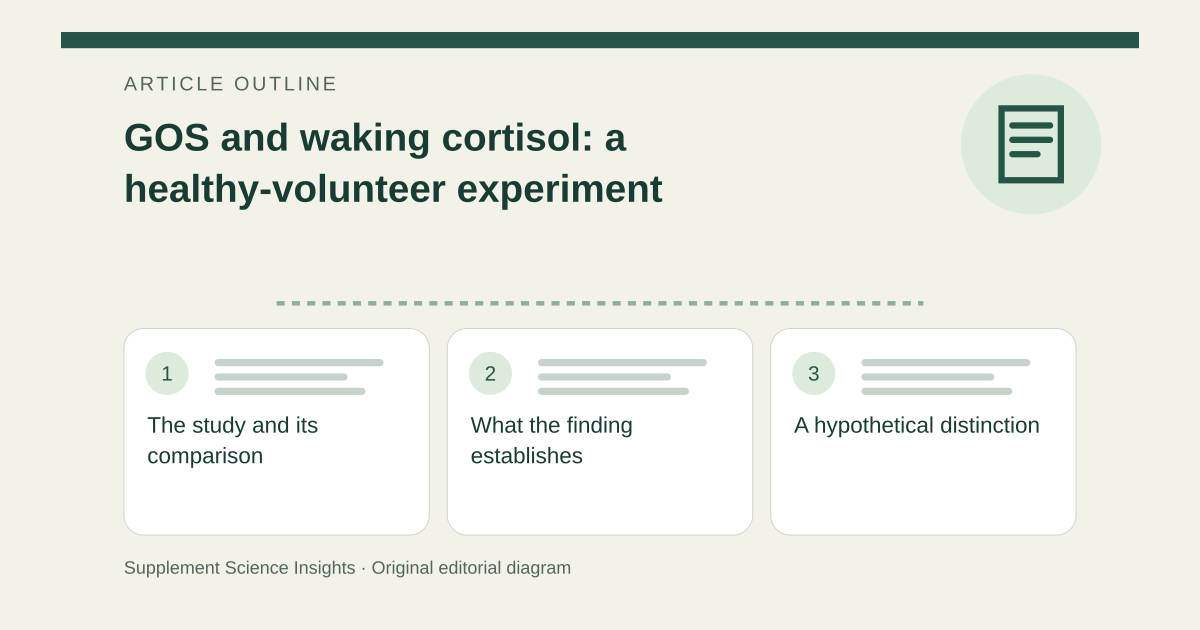
The study and its comparison
Forty-five healthy volunteers received B-GOS, FOS or maltodextrin placebo daily for three weeks. Researchers measured the cortisol awakening response and responses to emotional information in computer tasks. [1]
B-GOS lowered the measured waking cortisol response and shifted one attentional-bias measure compared with placebo. The same effects were not found with FOS. [1]
What the finding establishes
The participants were healthy and the endpoints were laboratory measures, not remission of diagnosed anxiety or depression. Funding included BBSRC, Clasado, Wellcome and MRC support; Clasado supplied preparations and had author affiliations. These product and endpoint distinctions matter when interpreting a broad prebiotic mood claim. [1]
A hypothetical distinction
Imagine two different prebiotics produce different laboratory results. Sharing a category does not establish a shared effect.
| Detail | Interpretation |
|---|---|
| Measured outcome | Keep the endpoint specific |
| Study preparation | Not every retail product |
| Remaining uncertainty | Not resolved by a mechanism |
Sources for this article
- Prebiotic intake reduces the waking cortisol response and alters emotional bias in healthy volunteers - PMC
Source consulted: 2026-09-19. This is a reference resource, not a claim that we conducted the studies or tested a product.