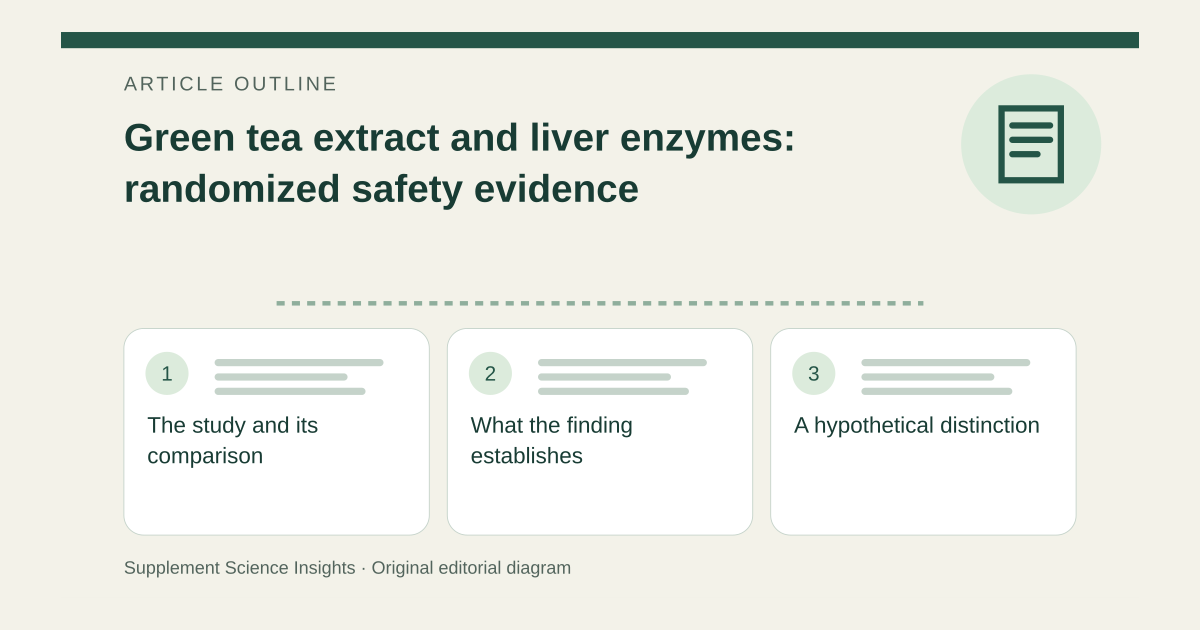
The study and its comparison
The Minnesota Green Tea Trial enrolled 1,075 postmenopausal women. A liver-safety analysis examined 1,021 with normal baseline liver enzymes who received concentrated green tea extract or placebo for twelve months. [1]
Liver enzymes rose more with the extract. Twenty-six women in the active group developed moderate or worse liver-test abnormalities. In affected participants, enzymes could improve after stopping the extract and rise again when exposure resumed. [1]
What the finding establishes
That withdrawal-and-rechallenge pattern strengthens the link with the extract. It does not provide an incidence estimate for ordinary brewed tea or green tea mixed with ginger. Complete funding and conflicts were not established from the abstract. The analysis assessed liver injury measures, not weight-loss benefit, and it challenges an assumption that concentrated botanical products are automatically harmless. [1]
A hypothetical distinction
Imagine an abnormal test resolves after withdrawal and returns after re-exposure. That pattern adds evidence beyond a single coincidental result.
| Detail | Interpretation |
|---|---|
| Measured outcome | Keep the endpoint specific |
| Study preparation | Not every retail product |
| Remaining uncertainty | Not resolved by a mechanism |
Sources for this article
- Effect of Green Tea Supplements on Liver Enzyme Elevation: Results from a Randomized Intervention Study in the United States.
Source consulted: 2026-09-19. This is a reference resource, not a claim that we conducted the studies or tested a product.