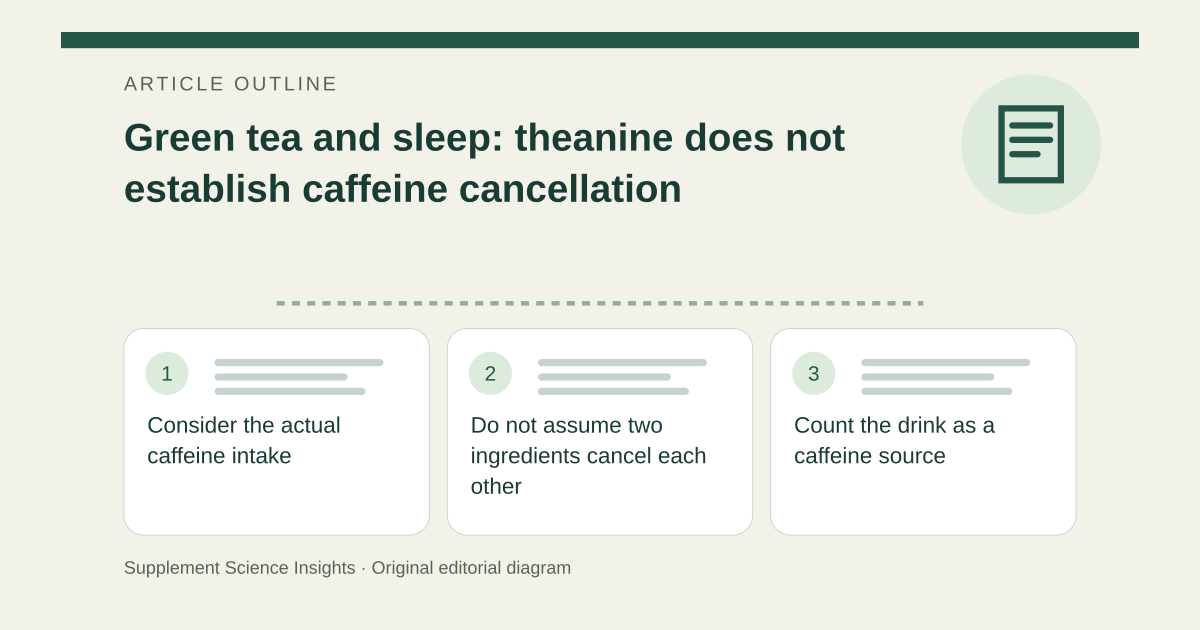
Consider the actual caffeine intake
NCCIH identifies green tea as a caffeine source, and FDA lists sleep disruption among possible effects of excessive caffeine. The name green tea alone does not tell you how much caffeine a serving supplies. [1][2]
Consider other caffeinated drinks and supplements as well. A soothing flavor or a calming claim does not establish that the total exposure is irrelevant to sleep. [1][2]
Do not assume two ingredients cancel each other
A claim about theanine should be supported by evidence for the relevant formulation and sleep outcome. Its presence on a label does not demonstrate that it neutralizes the caffeine in that product. [1][2]
Concentrated green-tea extracts also have a different safety profile from brewed tea. NCCIH reports adverse effects and uncommon liver injury associated primarily with extract products; they are not simply a caffeine-free bedtime alternative. [1][2]
Count the drink as a caffeine source
Imagine someone avoids evening coffee but drinks several servings of green tea. The substitution does not automatically remove caffeine exposure. Review serving amounts and timing when assessing the sleep pattern.
| Detail | Interpretation |
|---|---|
| Green tea | May contribute caffeine |
| Theanine claim | Does not prove cancellation |
| Extract capsules | Different exposure from brewed tea |
Sources for this article
- Green Tea: Usefulness and Safety | NCCIH
Source consulted: 2026-09-17. This is a reference resource, not a claim that we conducted the studies or tested a product. - Spilling the Beans: How Much Caffeine is Too Much? | FDA
Source consulted: 2026-09-17. This is a reference resource, not a claim that we conducted the studies or tested a product.